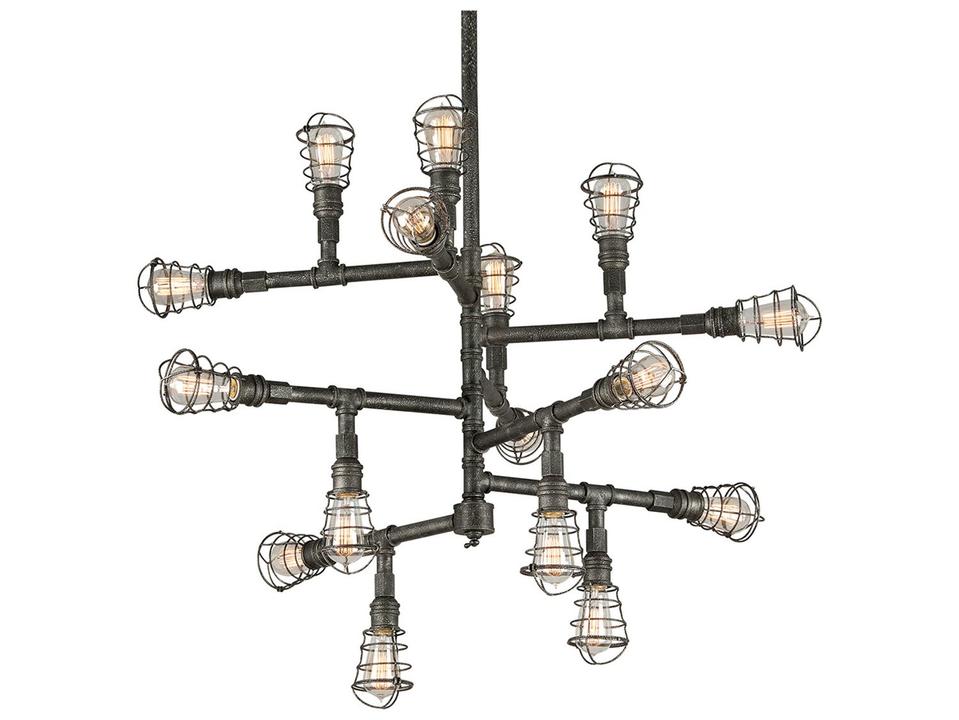
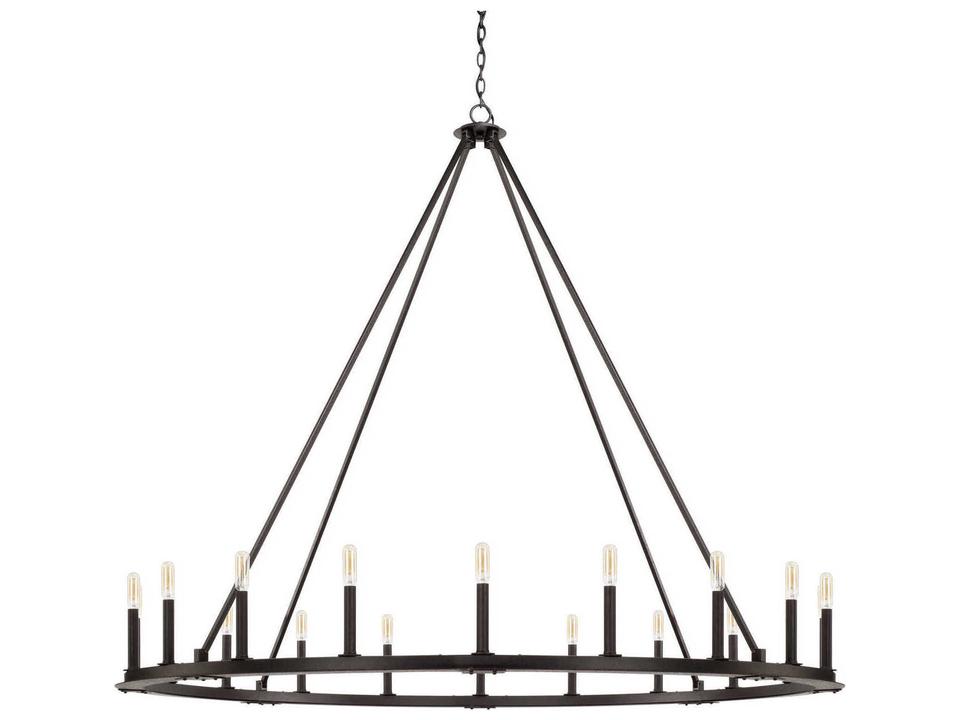
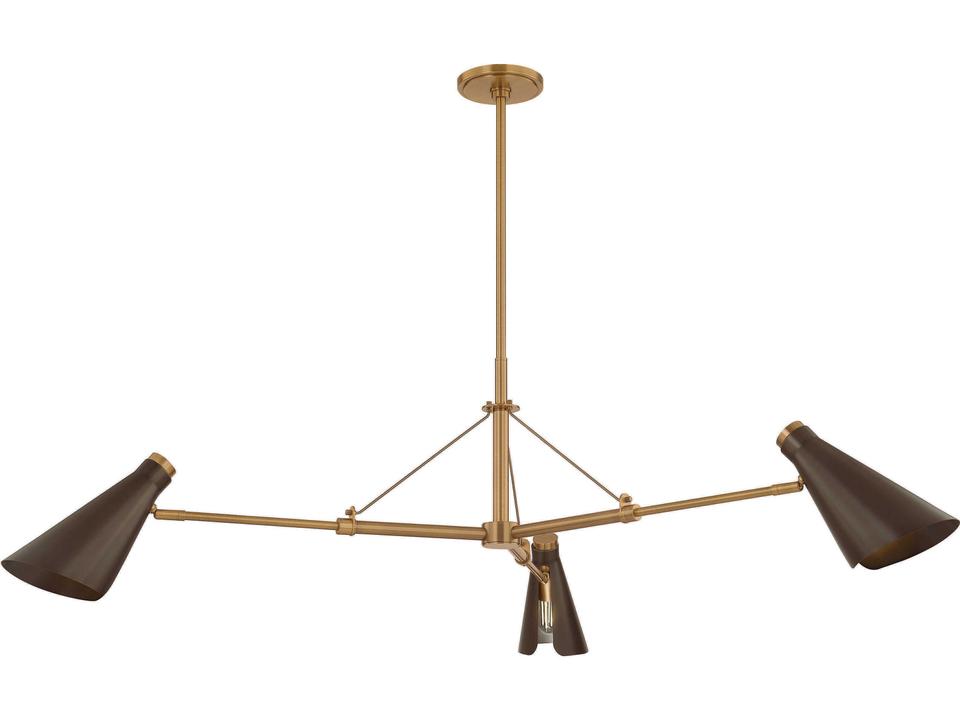
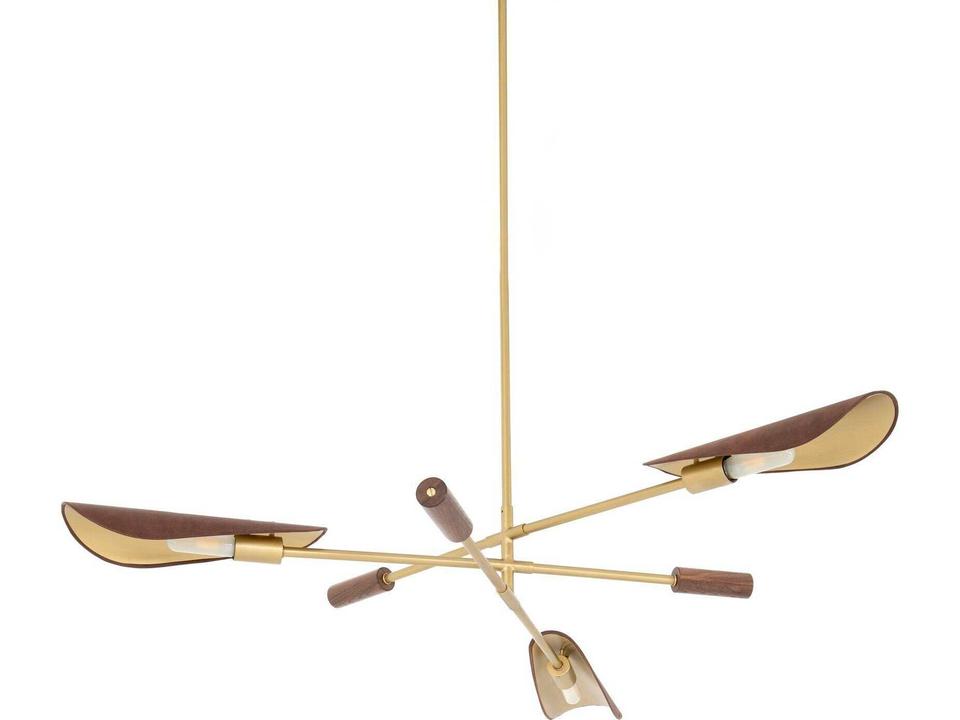
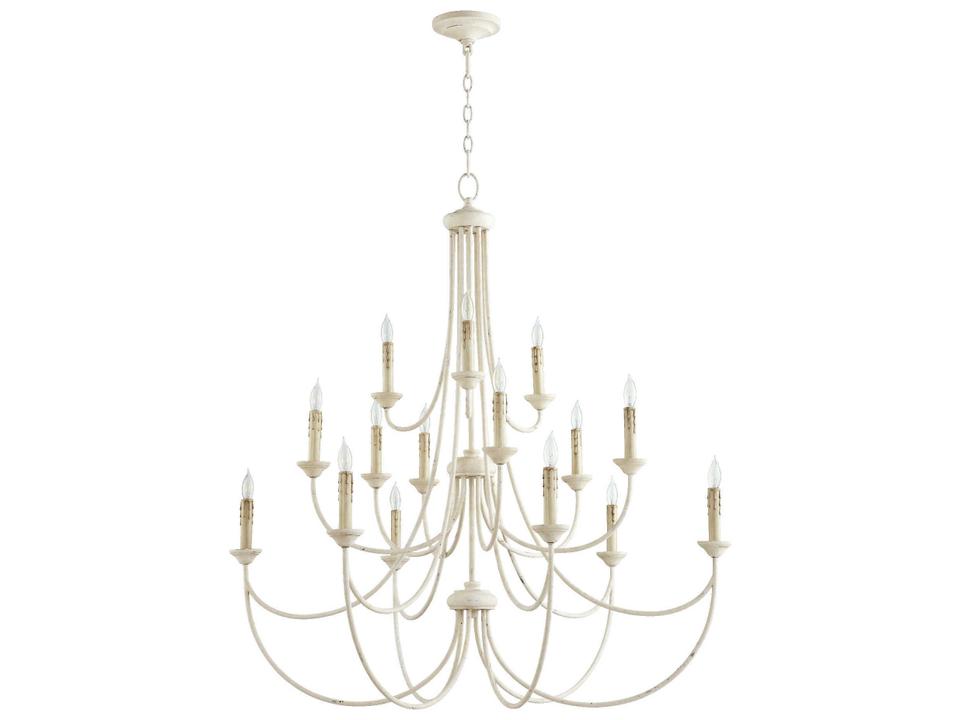
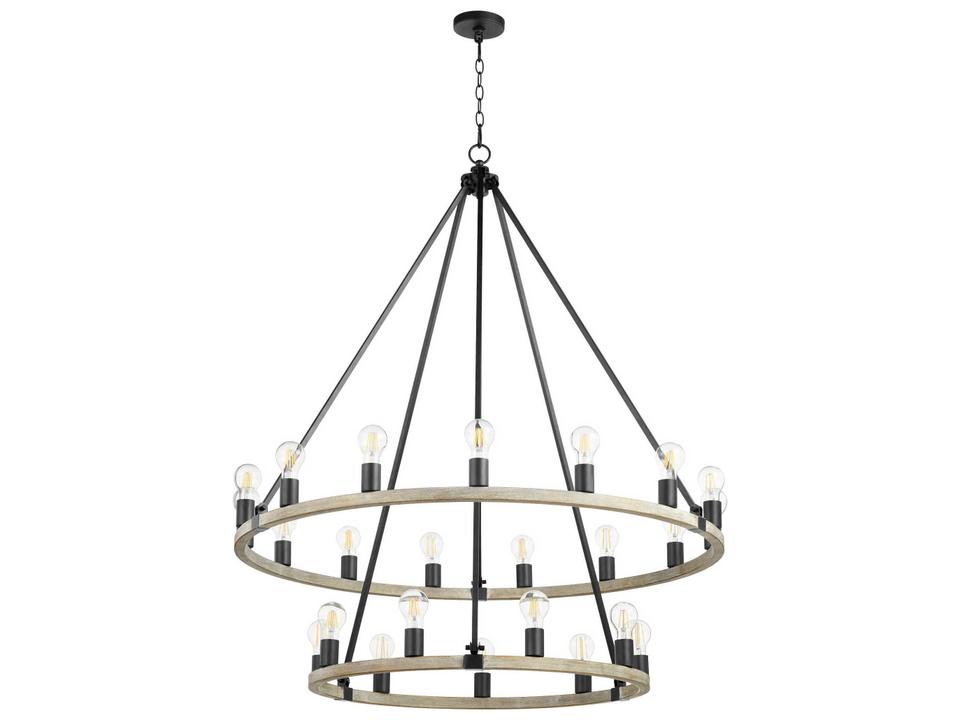
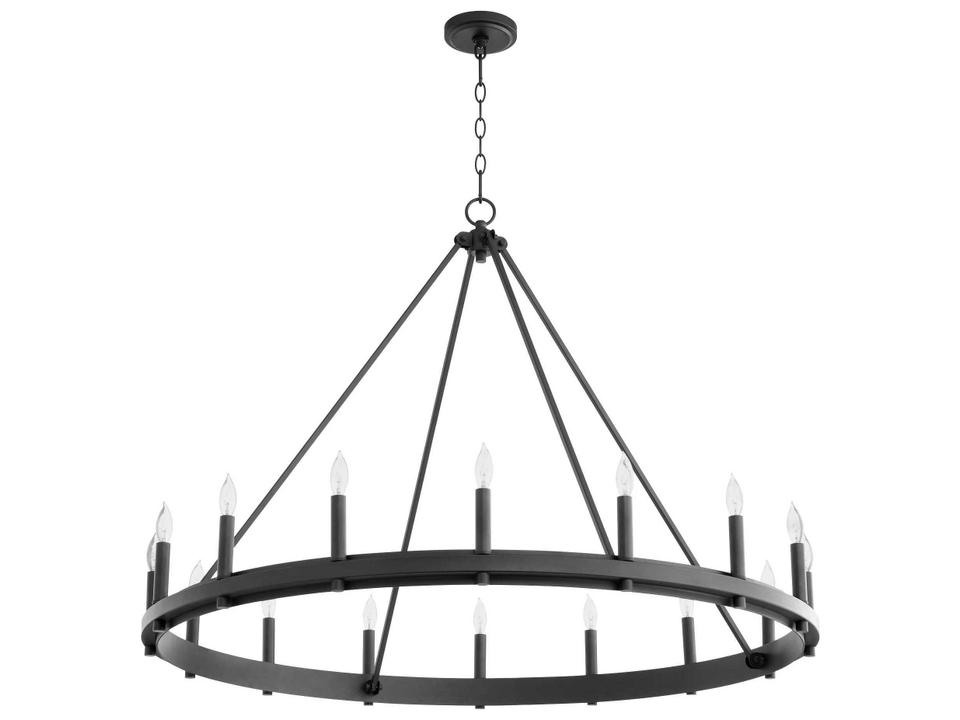
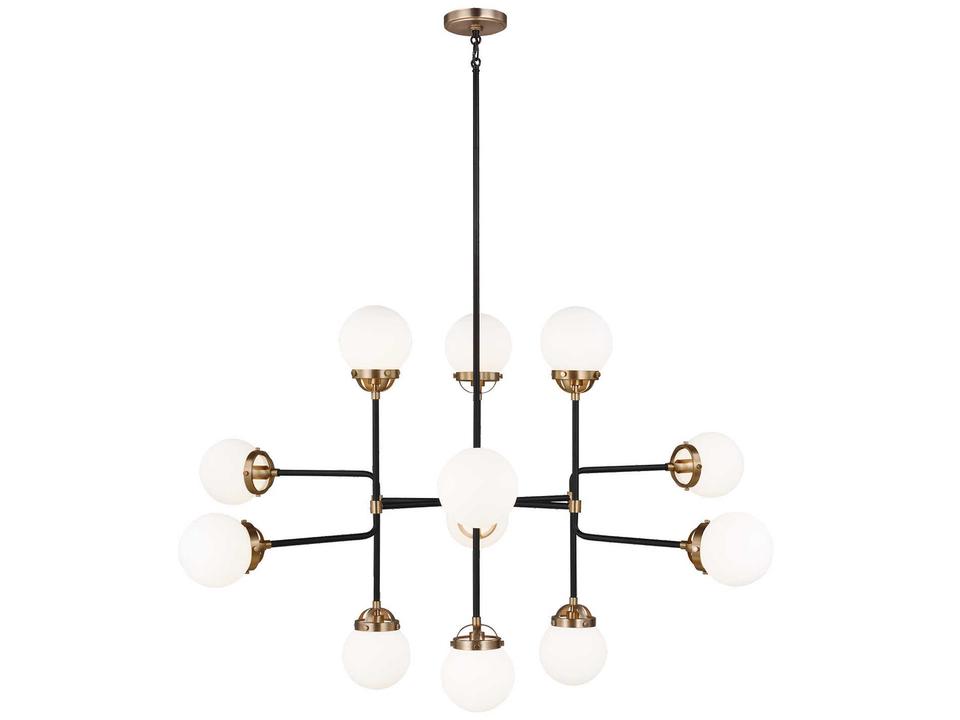
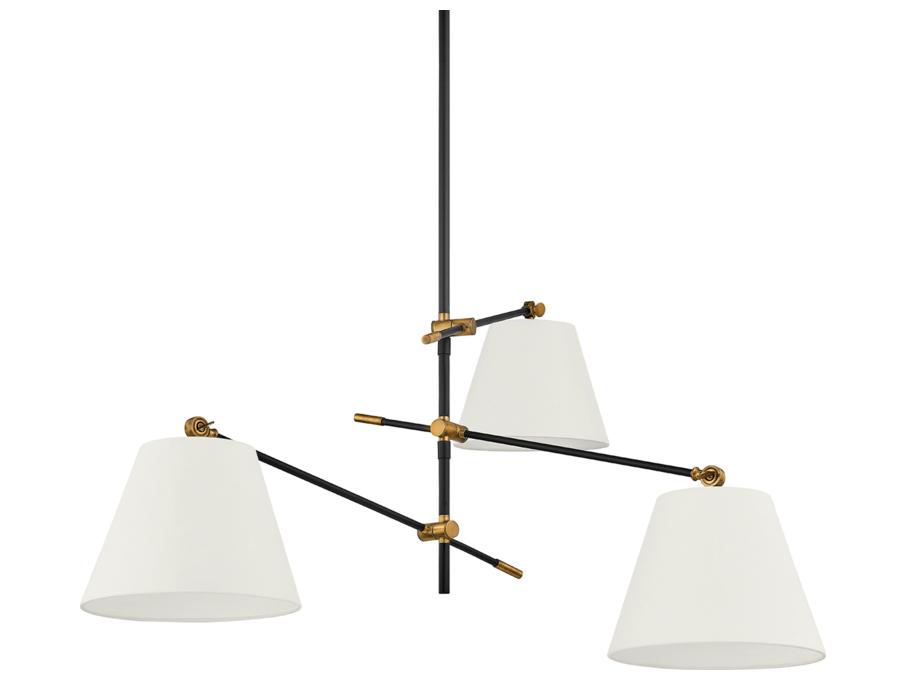
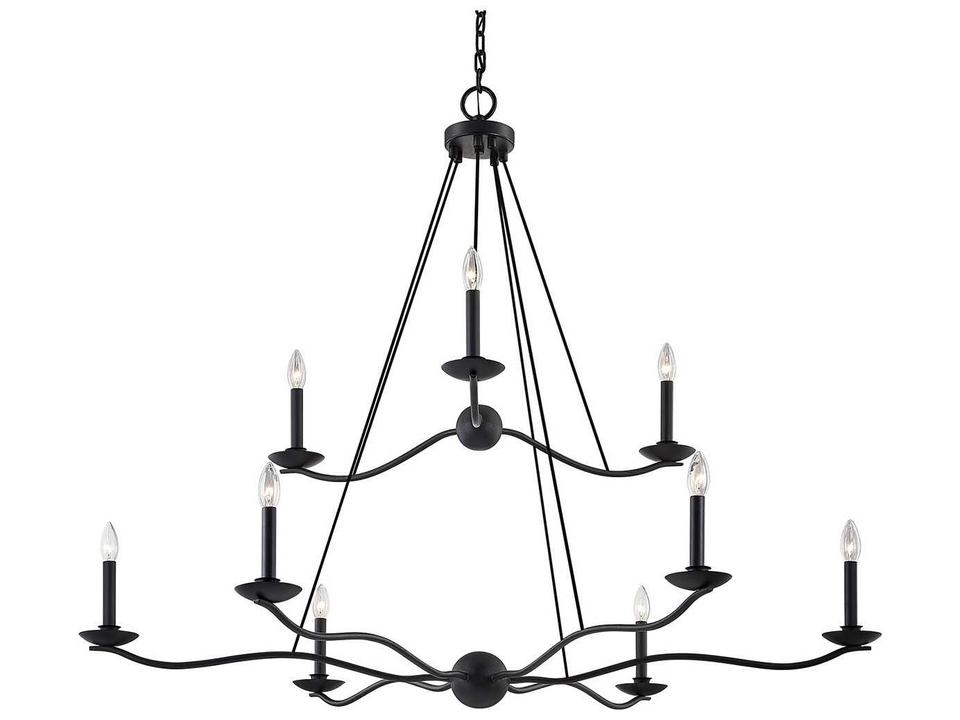
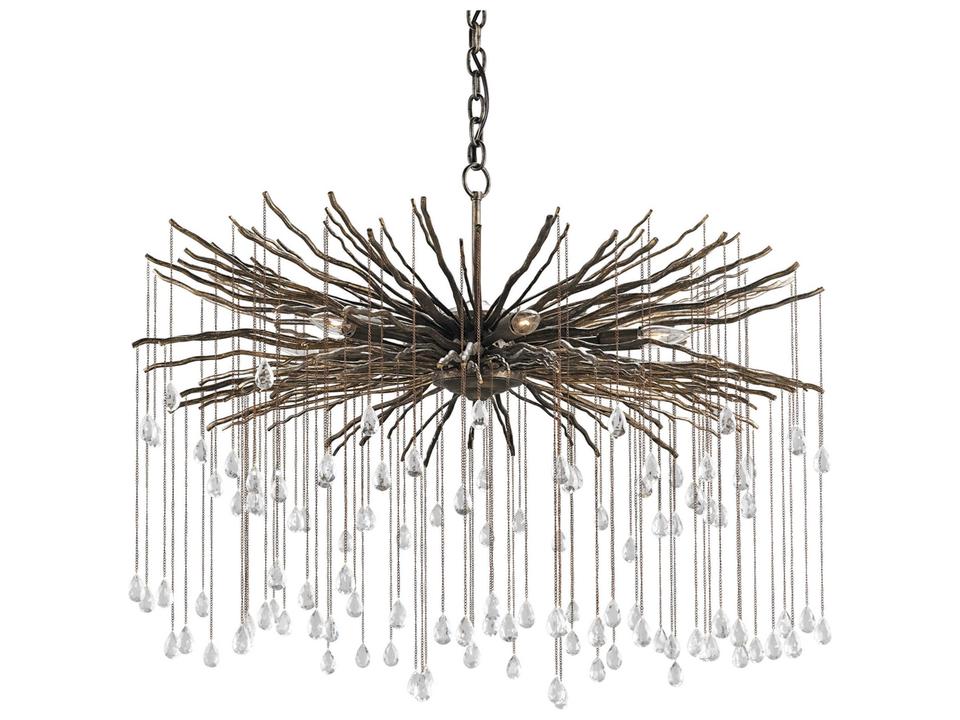
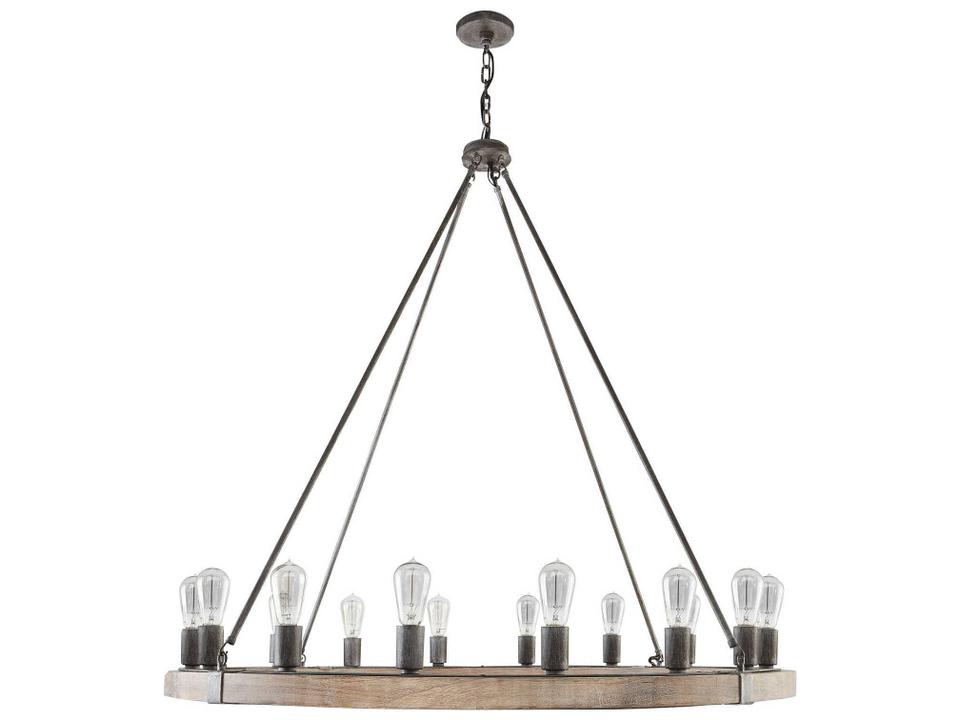
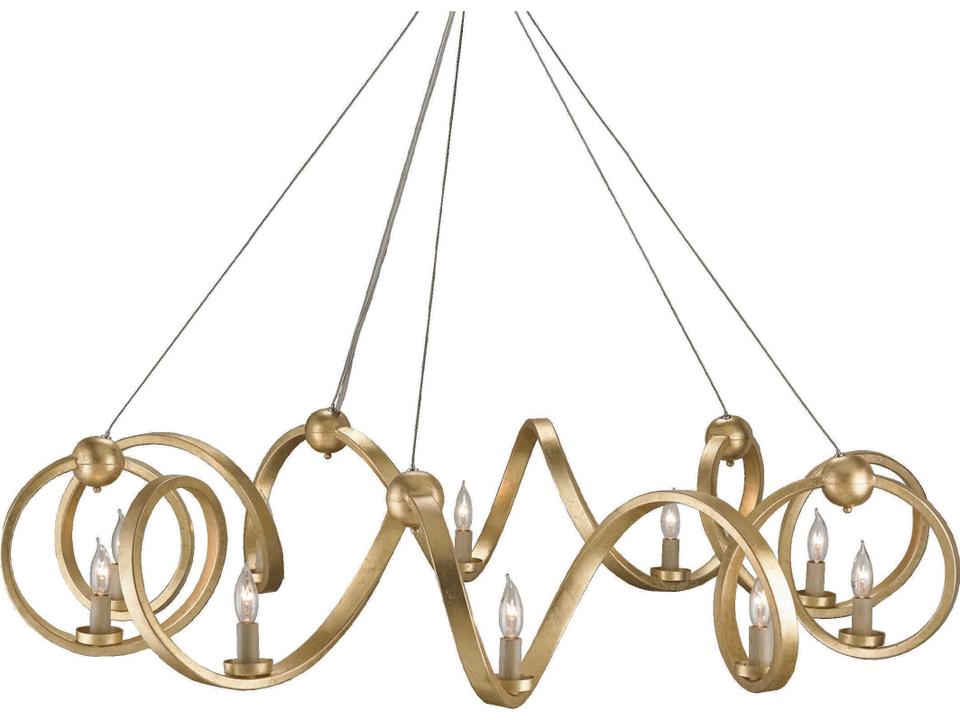
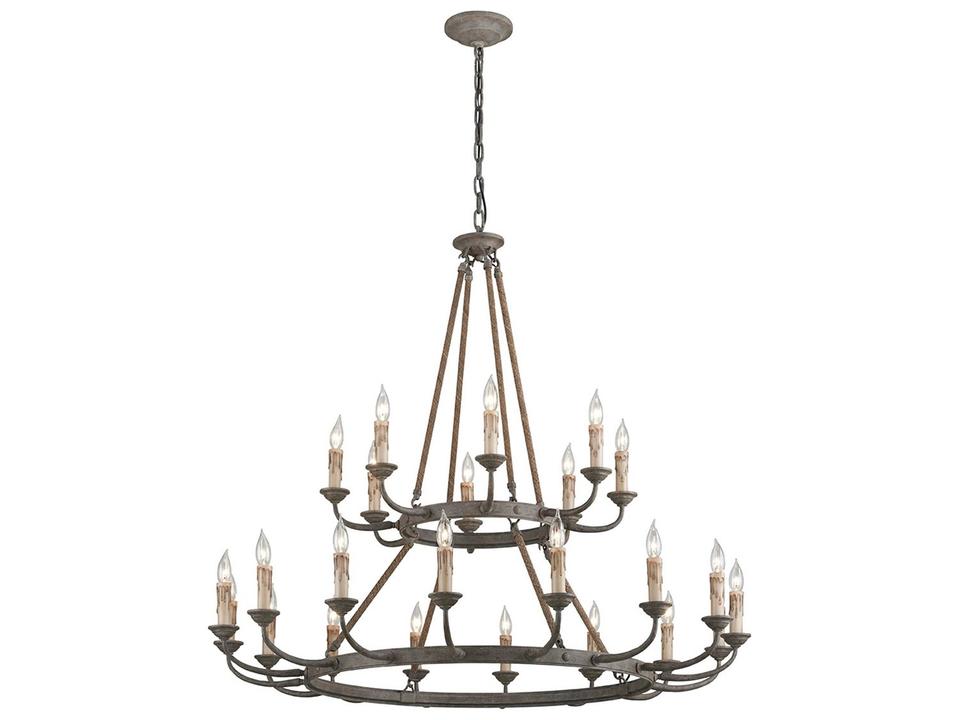
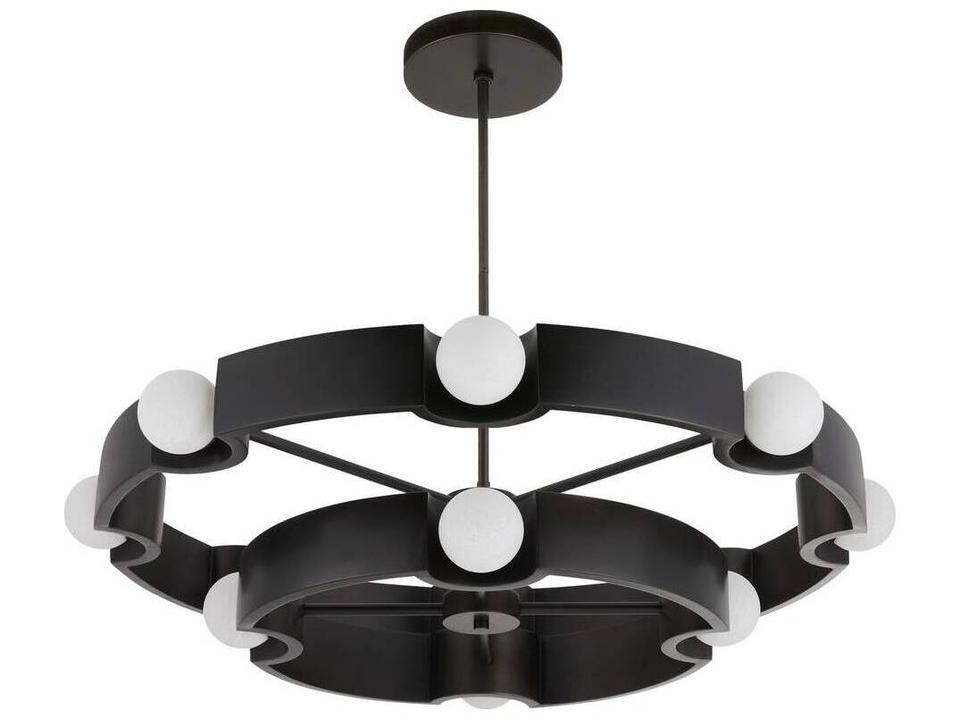
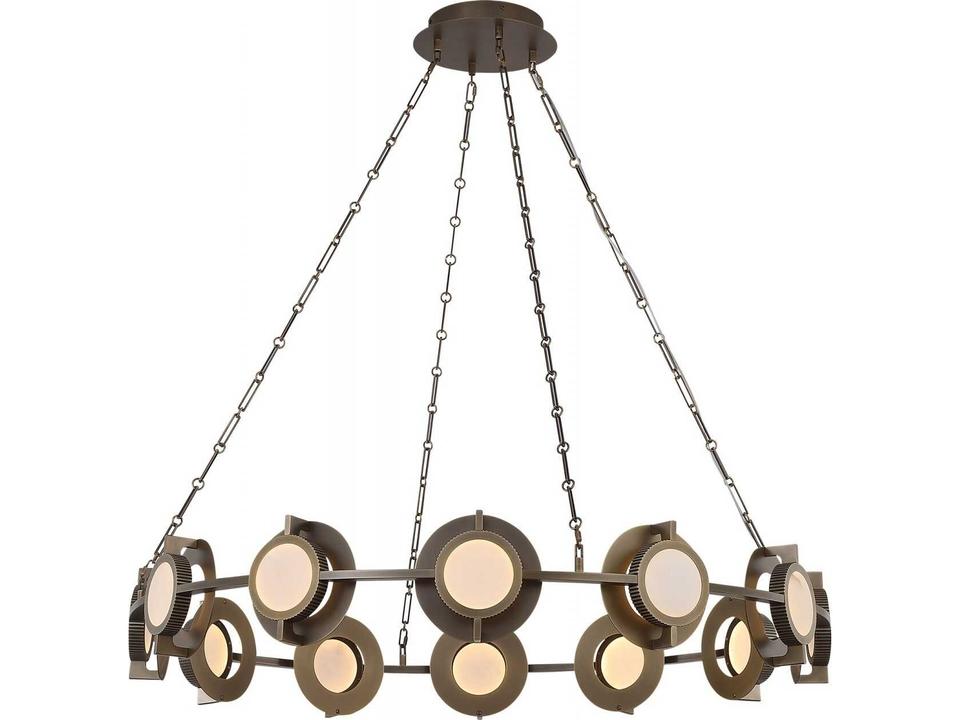
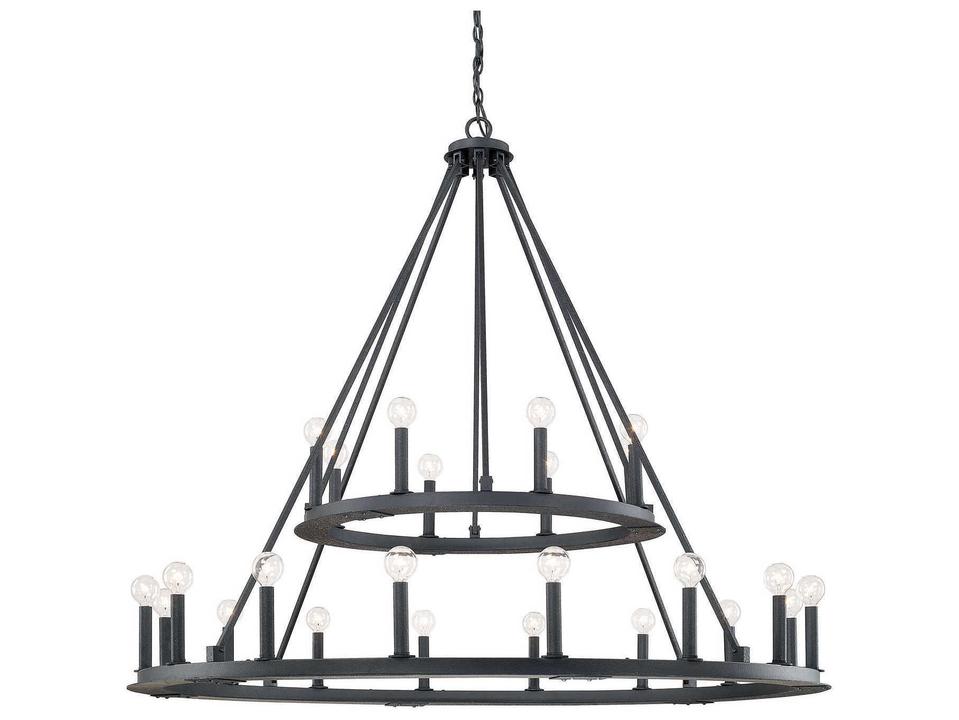
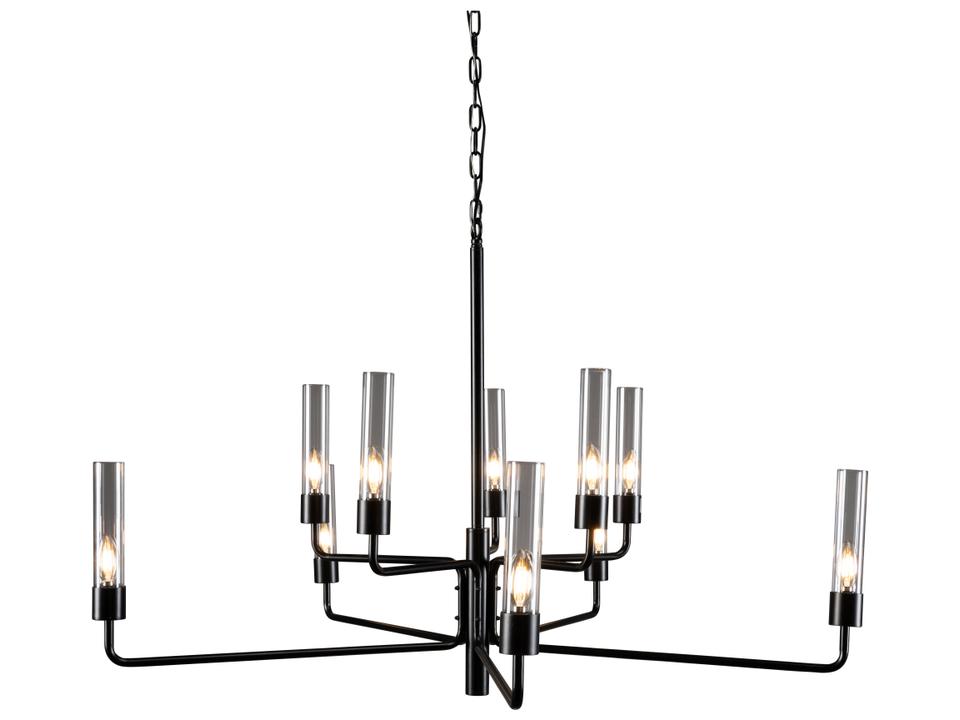
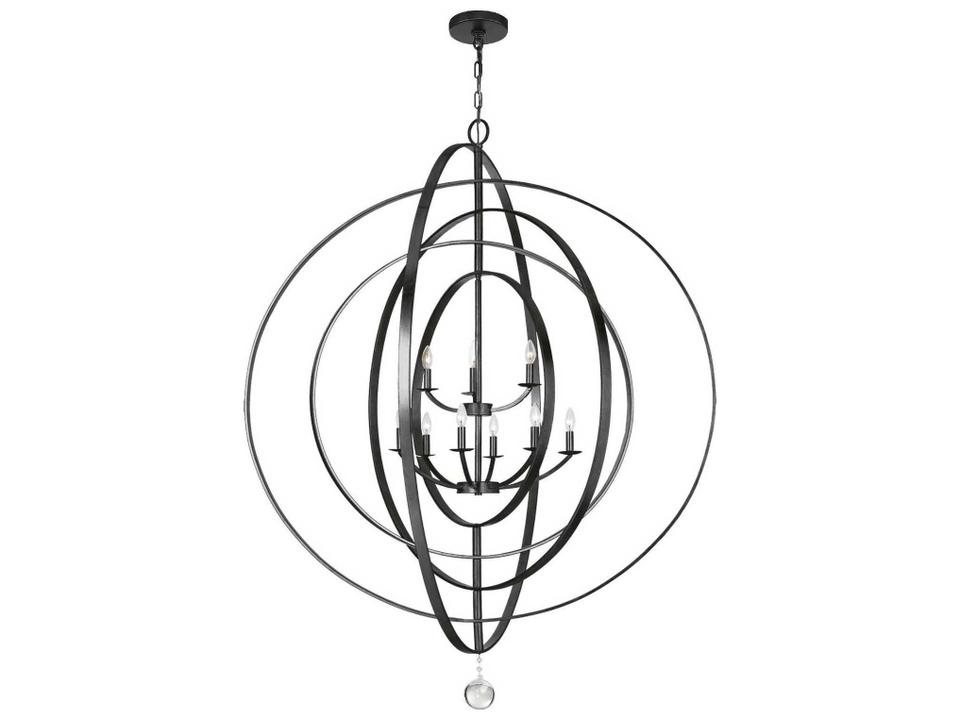
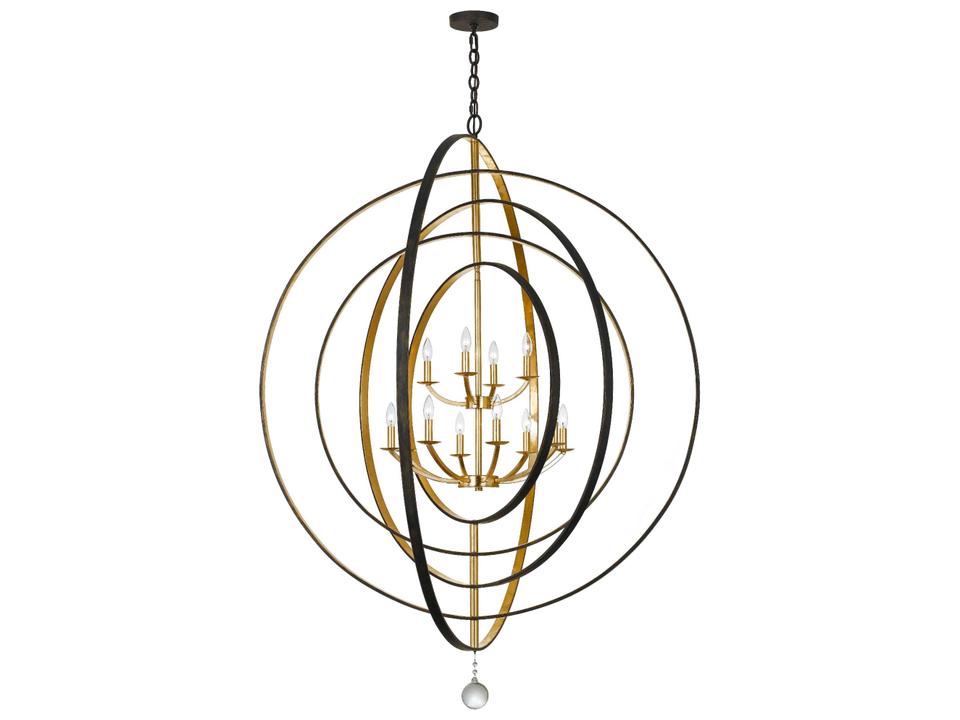
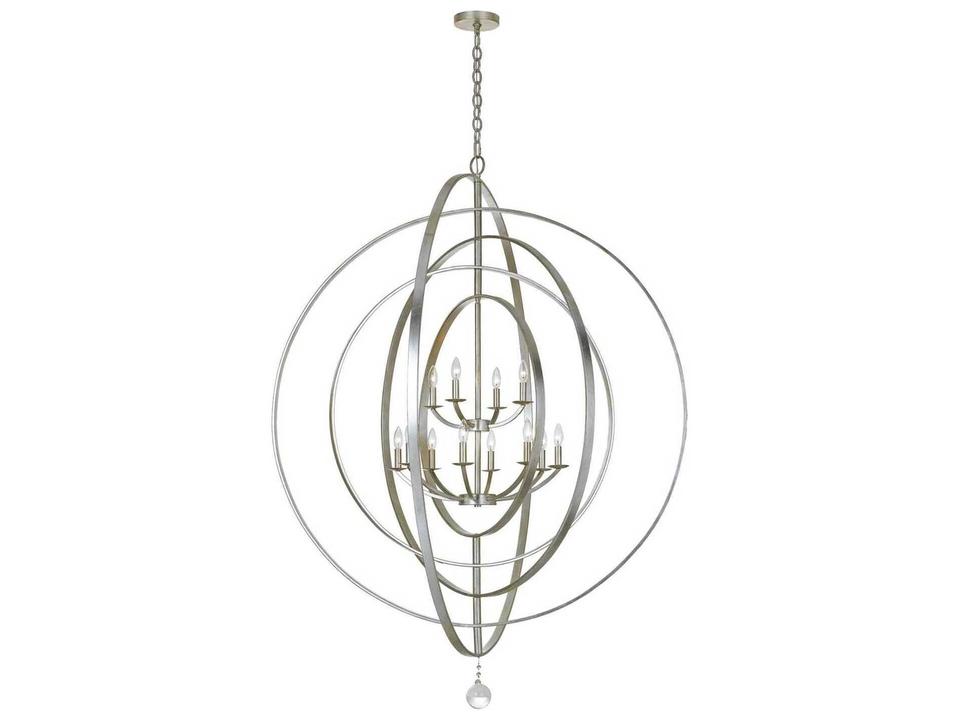
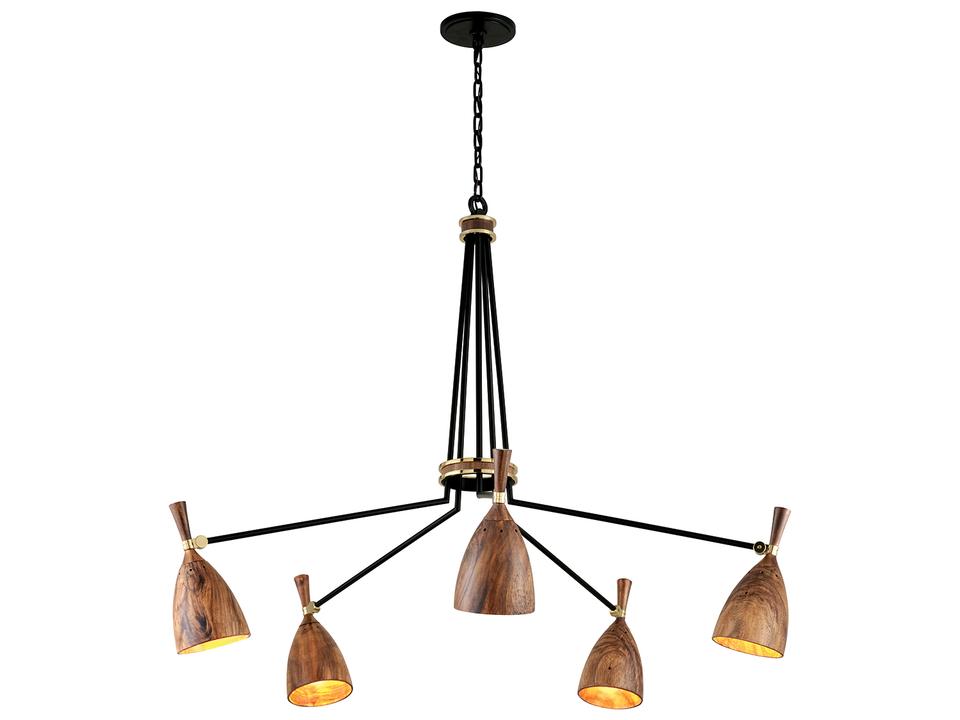
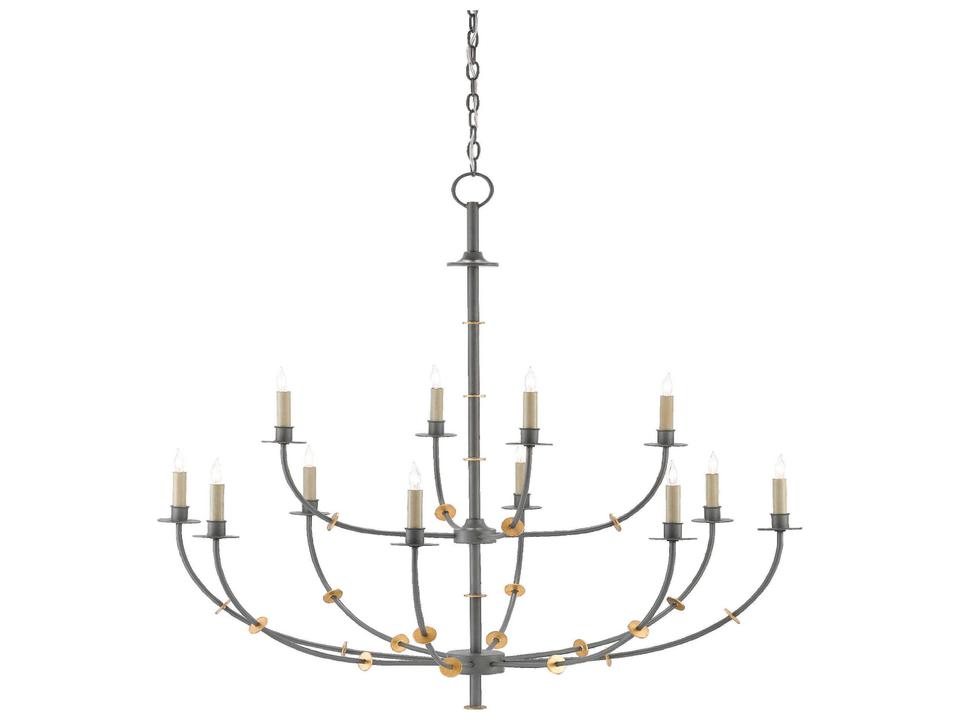
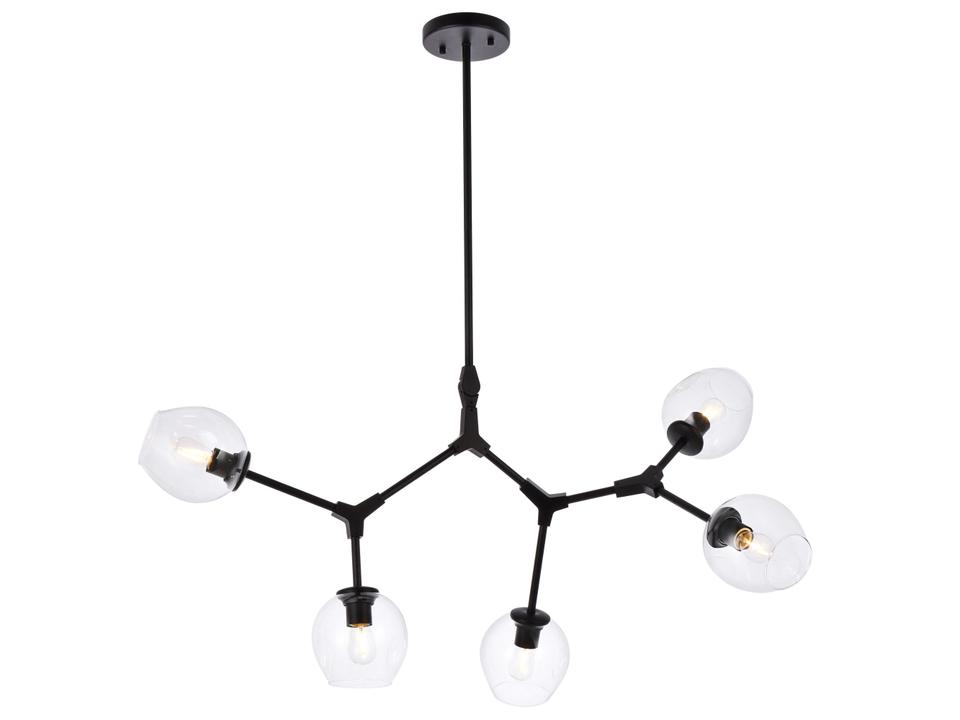
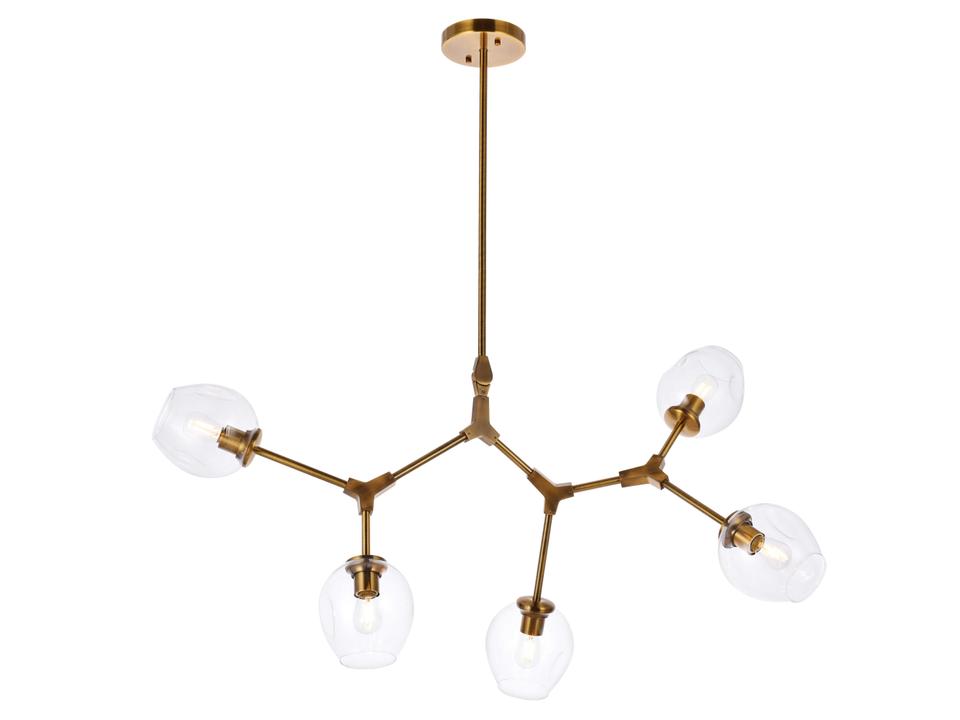
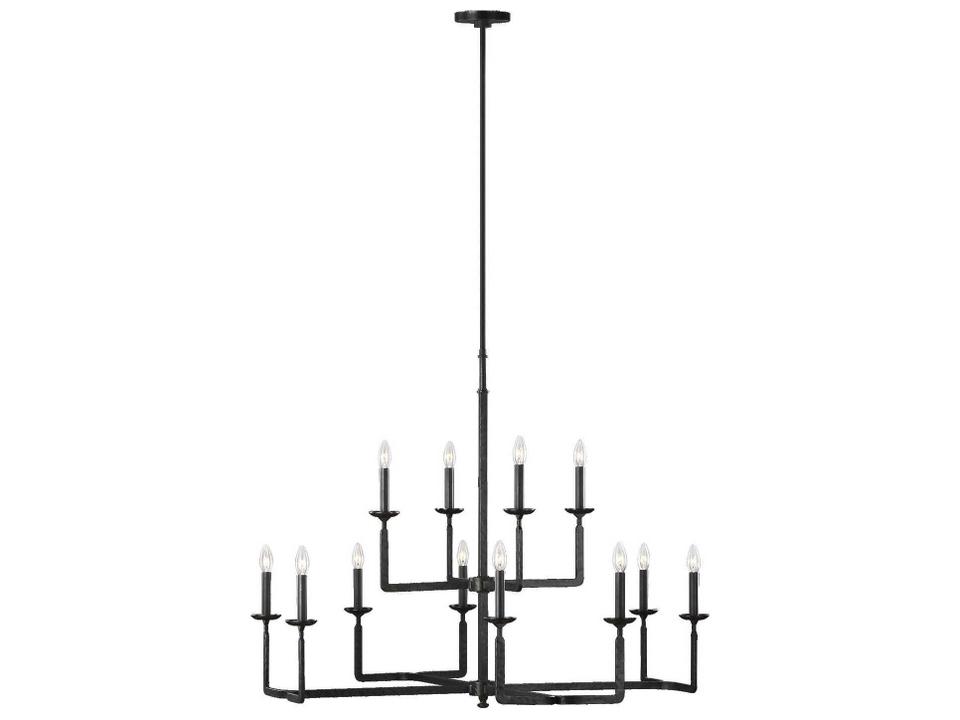
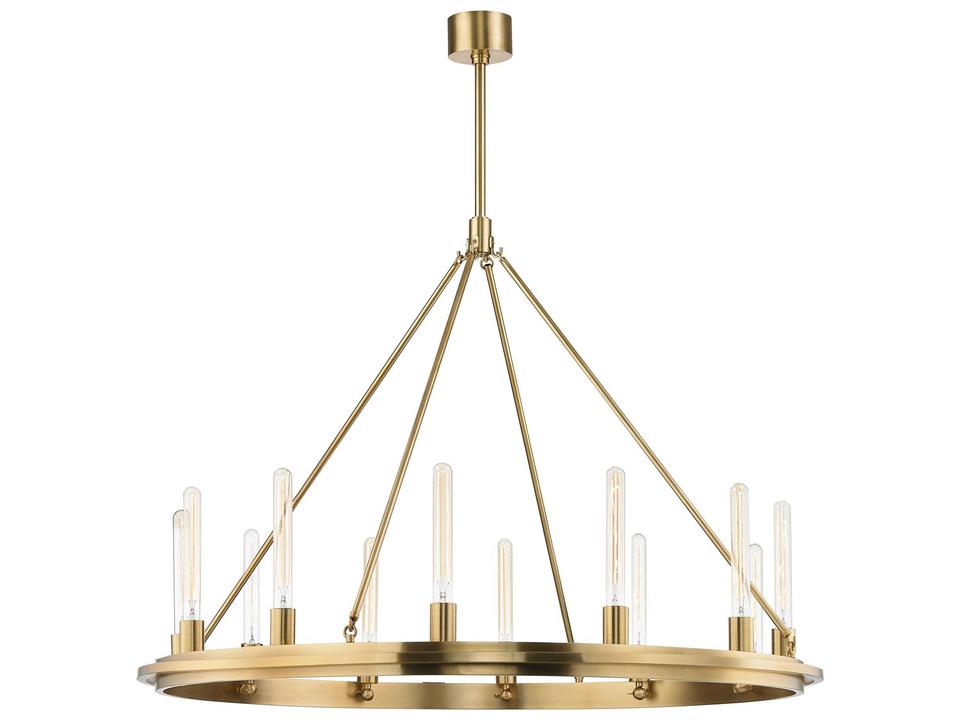
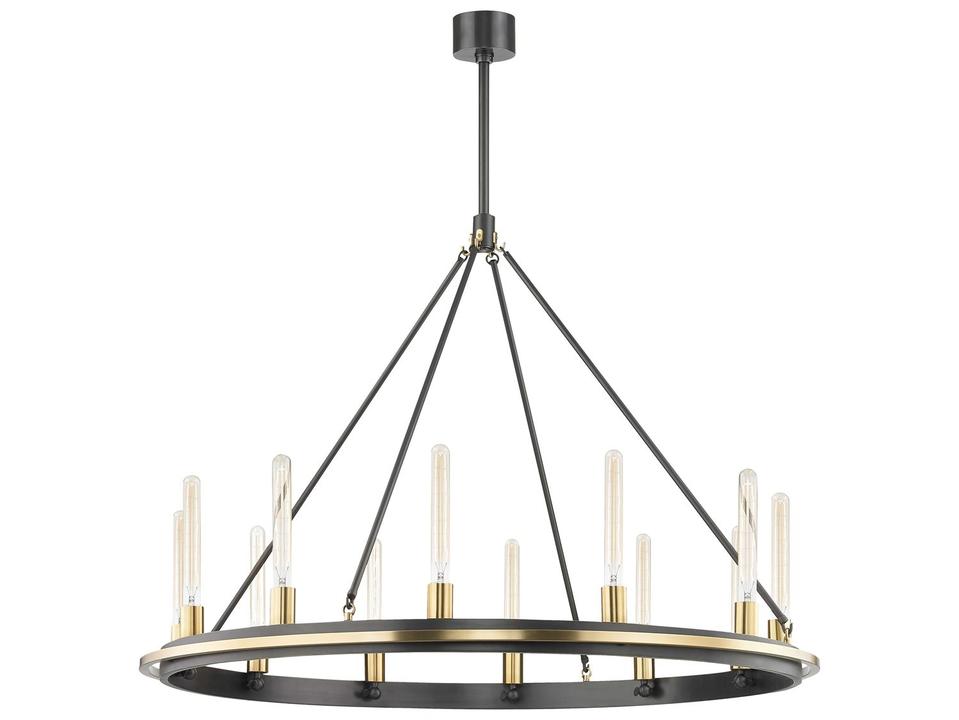
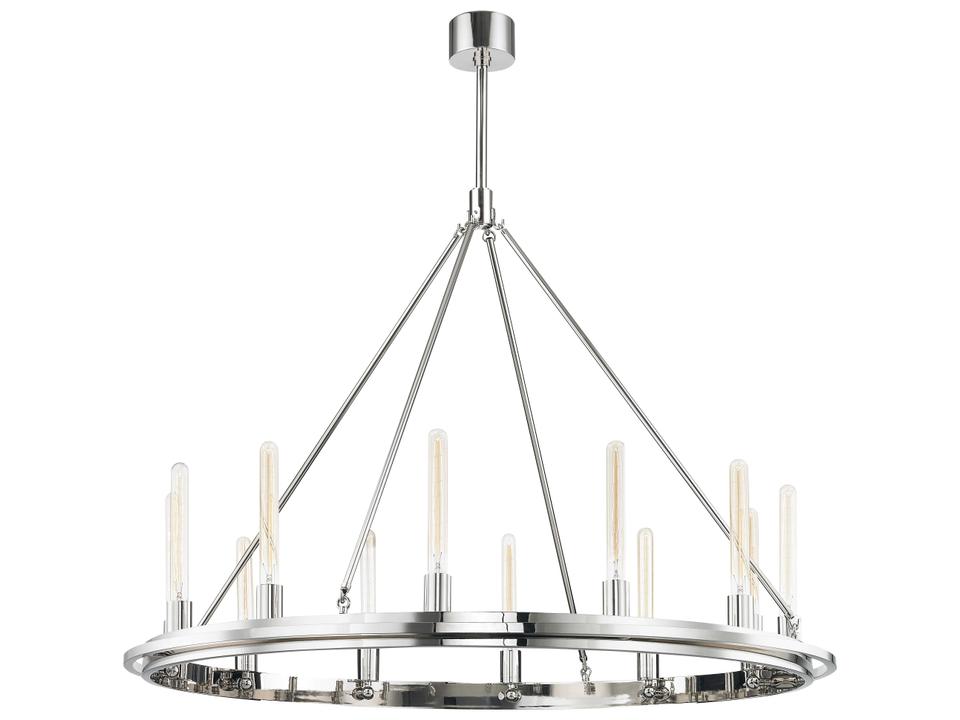
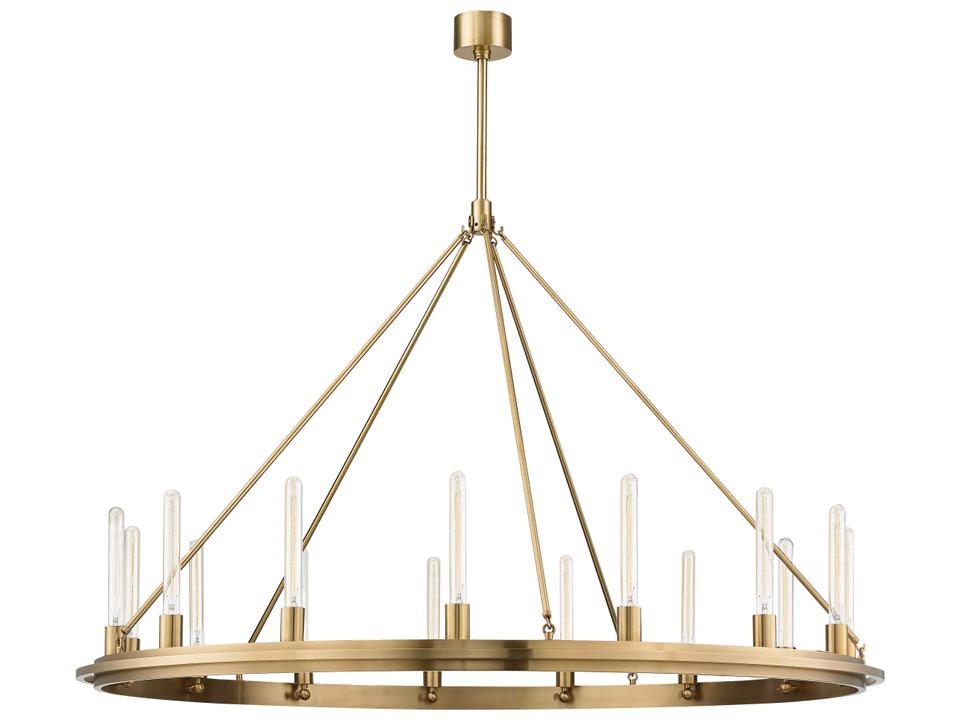
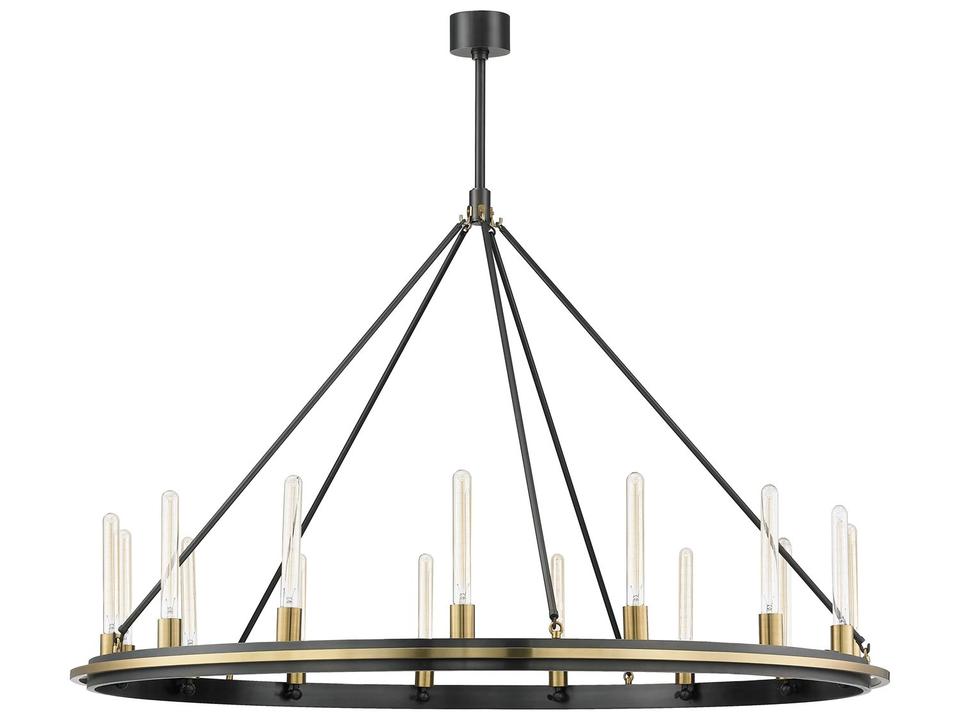
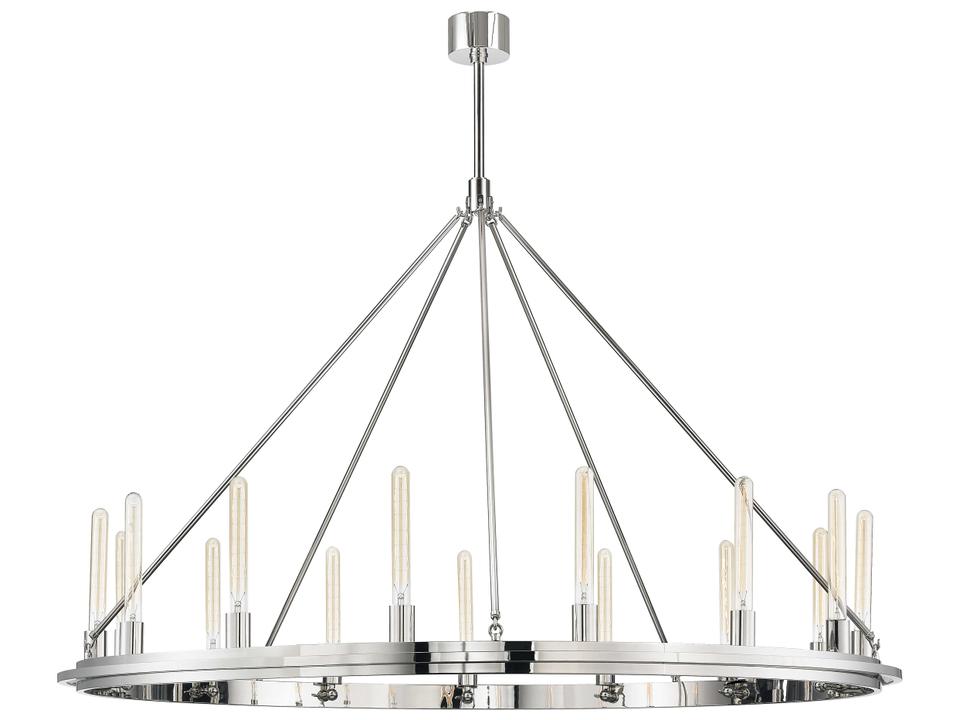
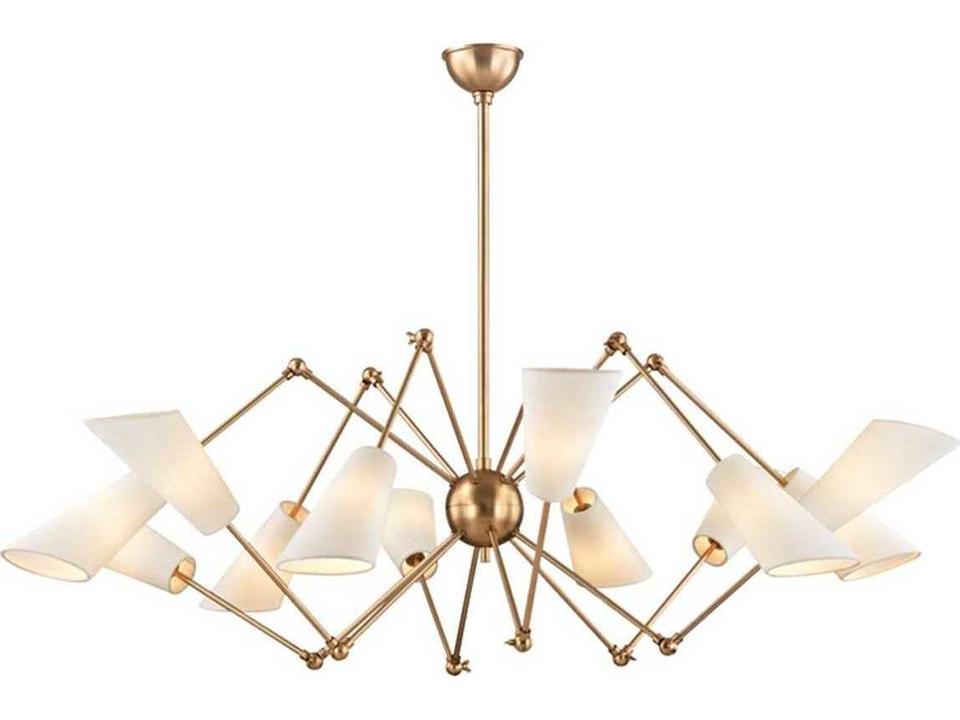
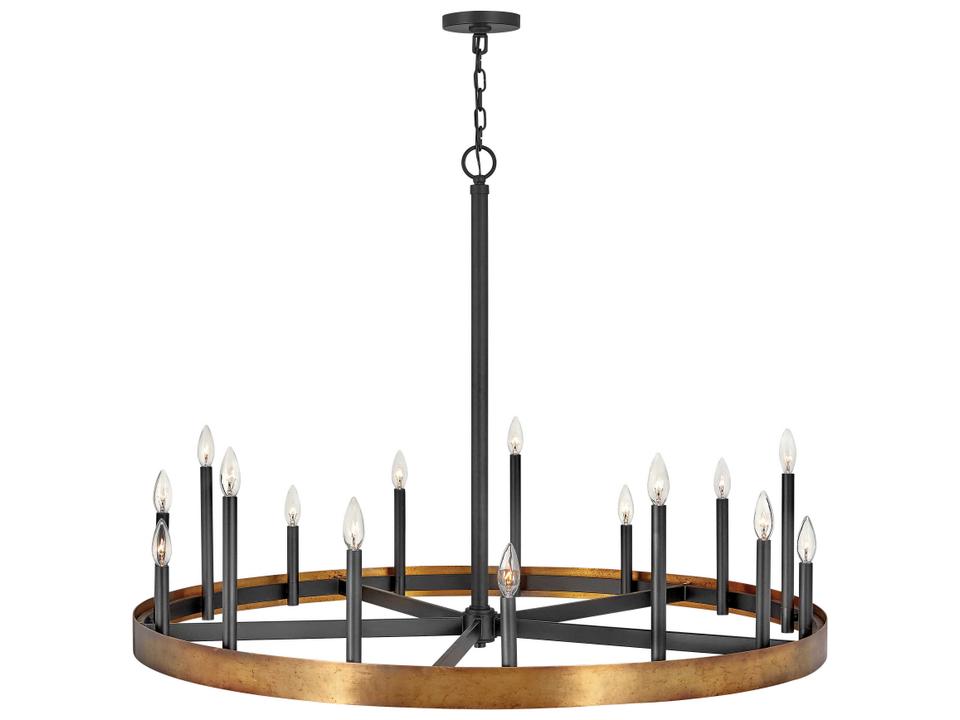
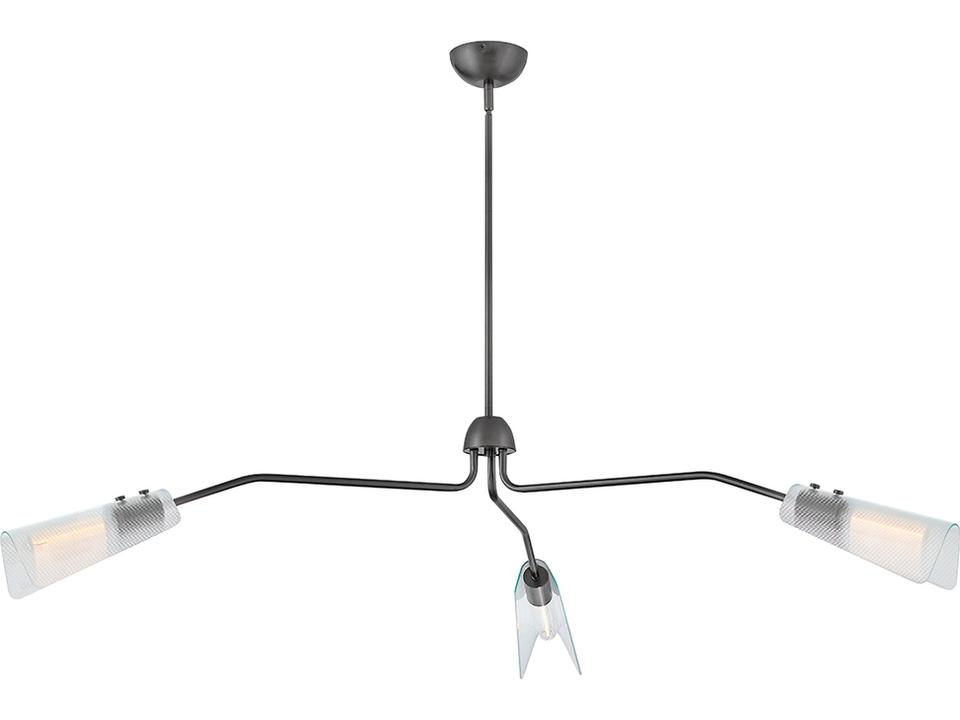
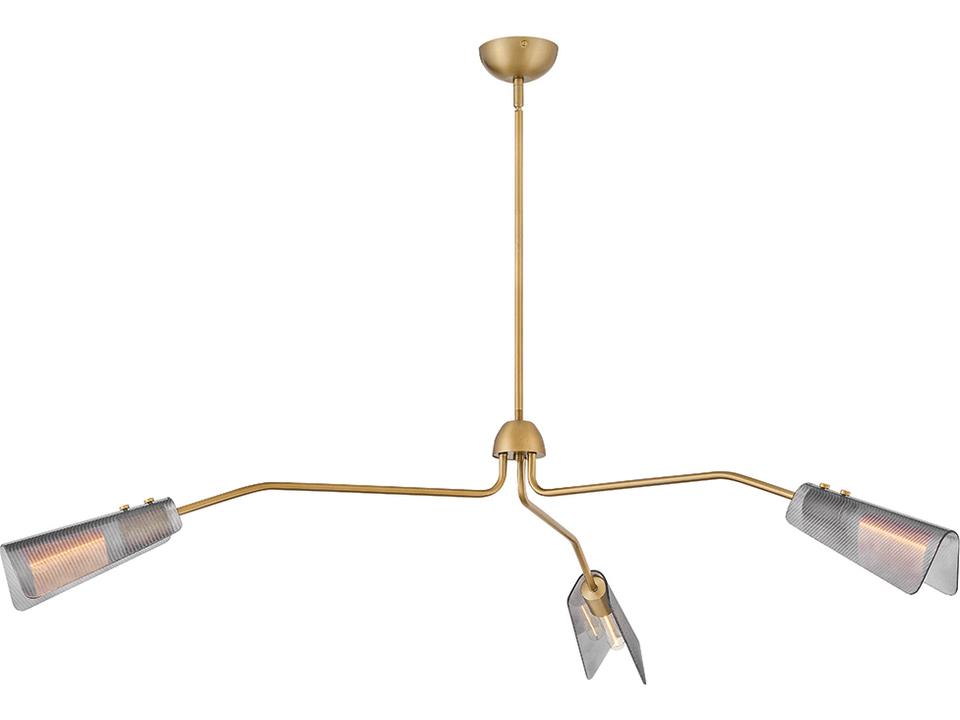
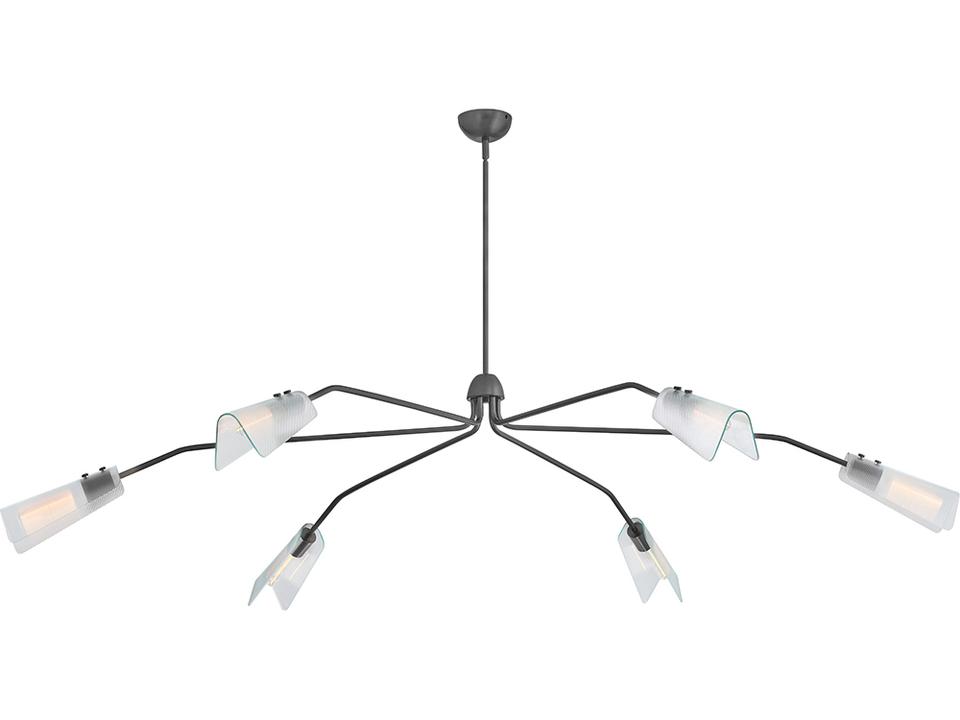
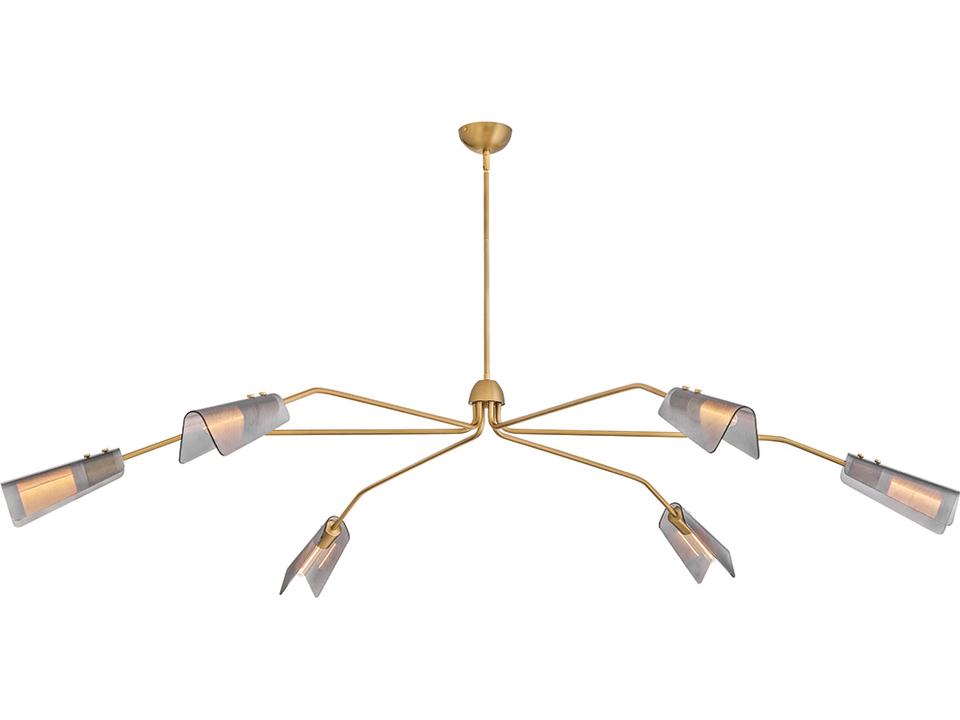
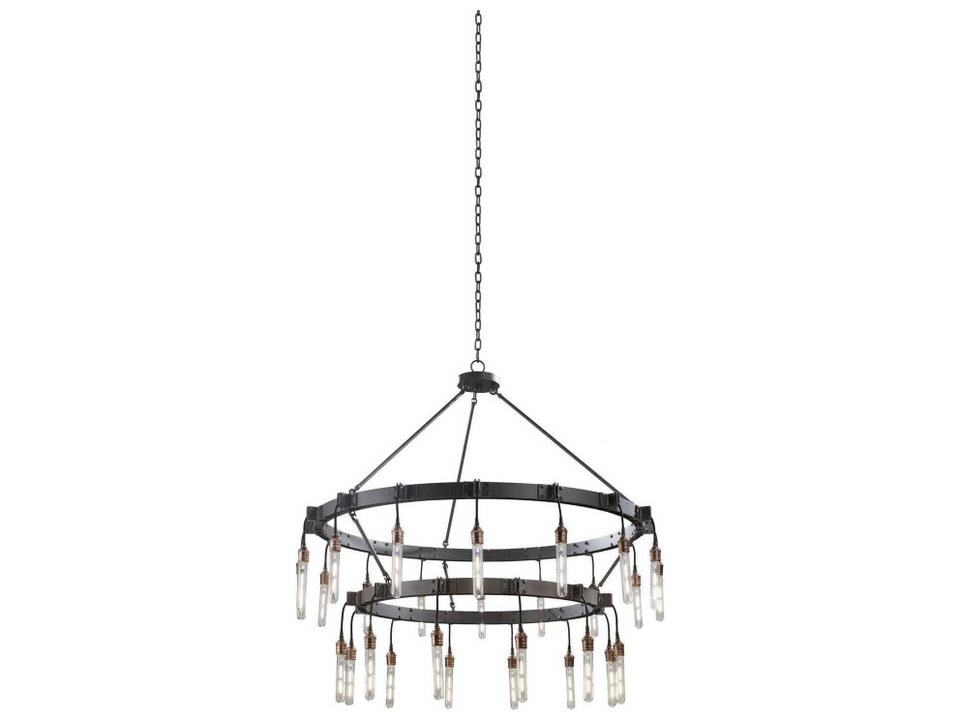
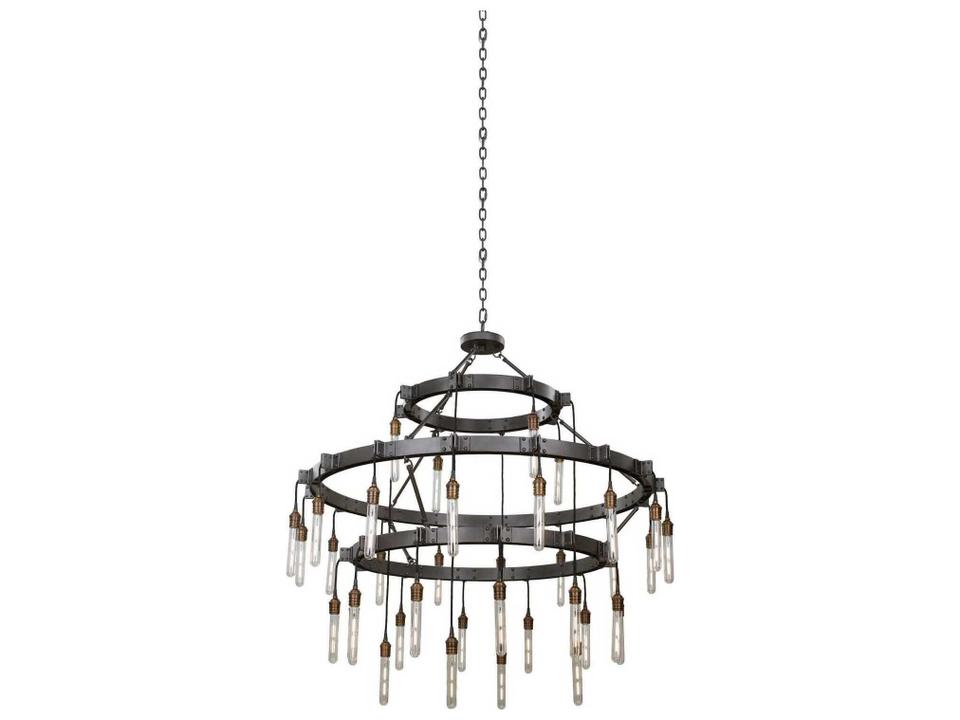
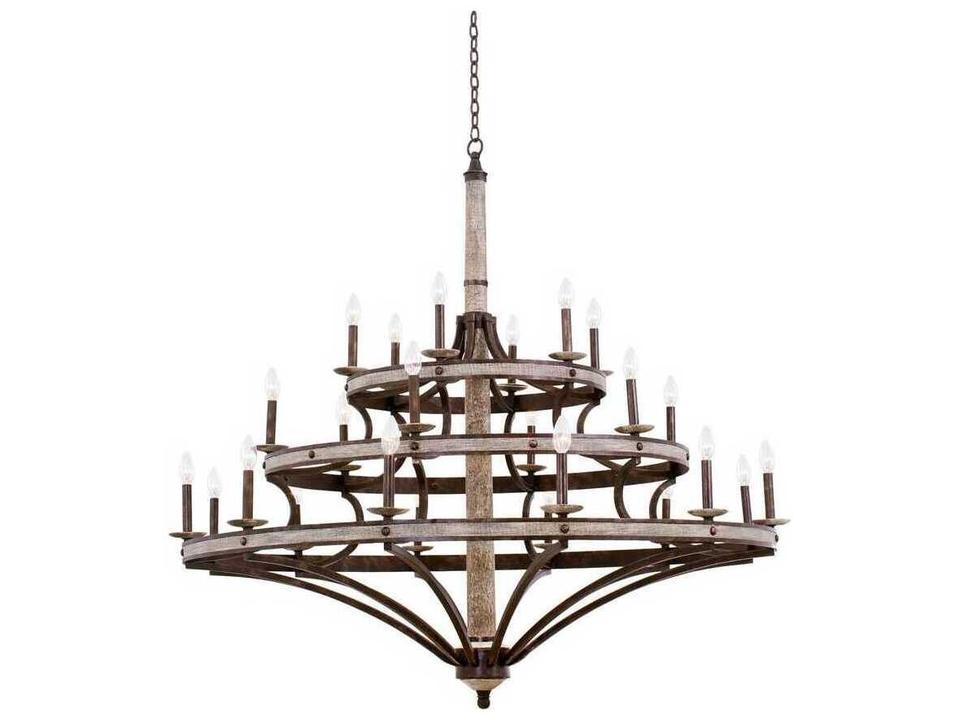
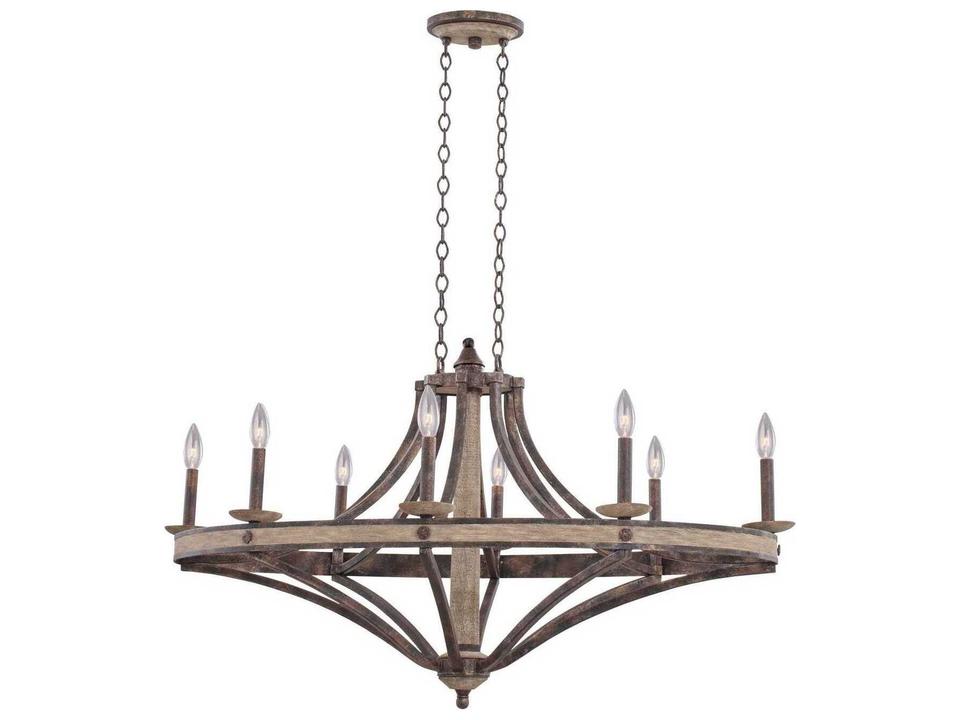
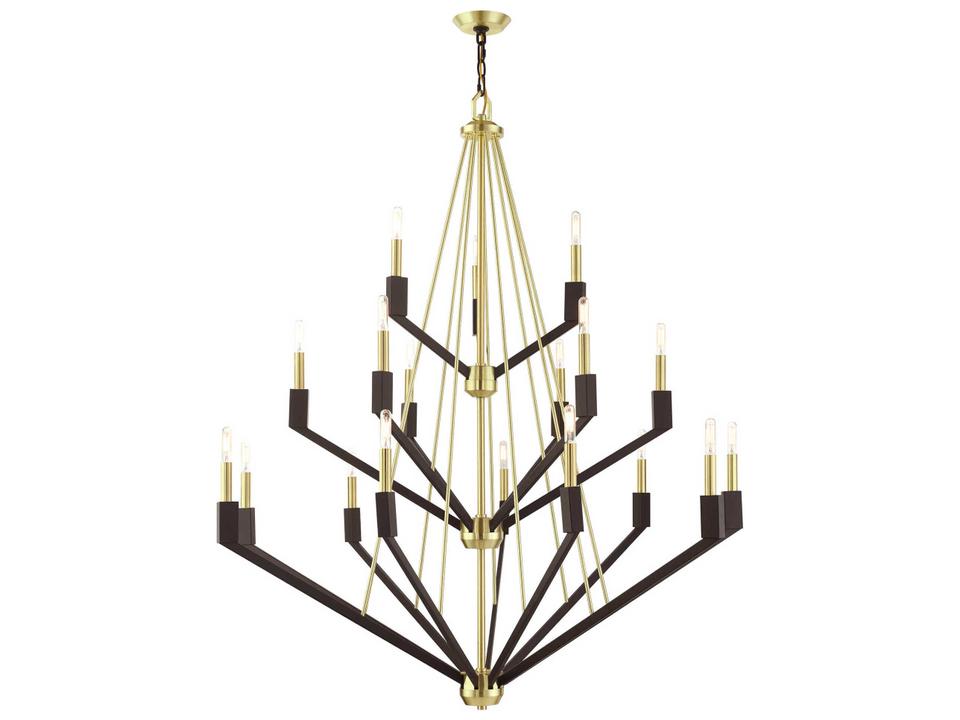
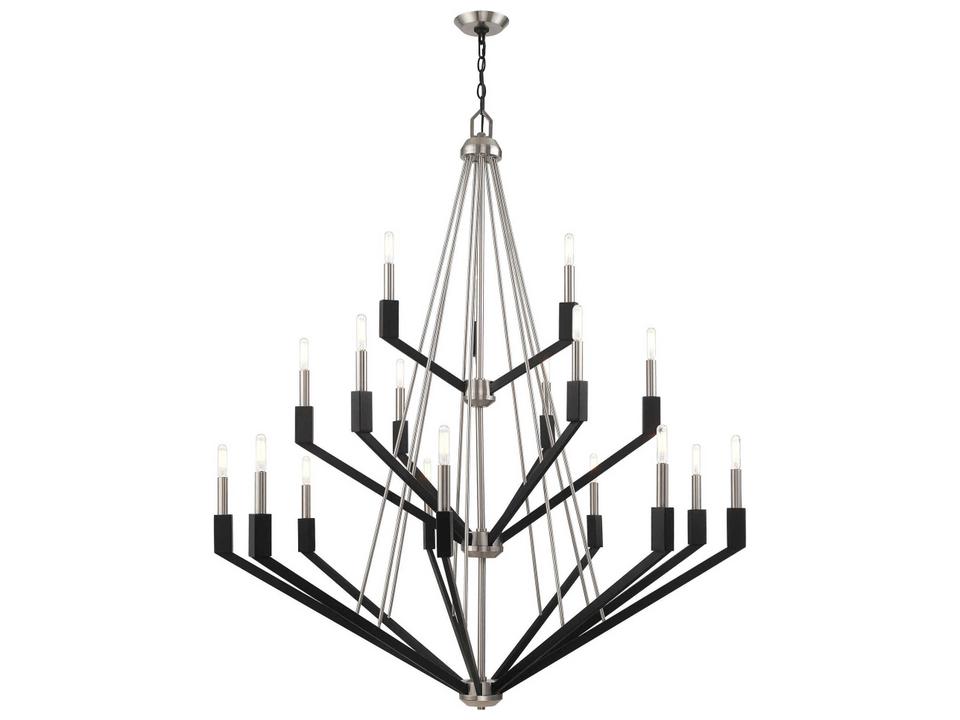
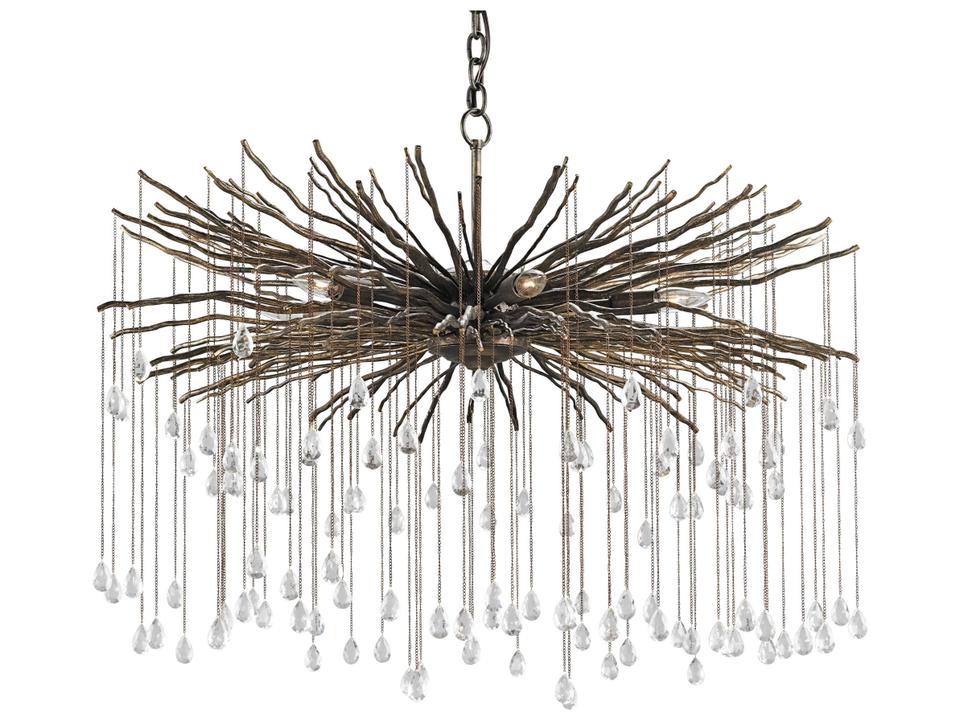
Large industrial chandeliers split into three main material families, and each one reads differently in a room. Wrought iron delivers the heaviest texture — dark, hand-forged, and unmistakably raw. Steel runs cleaner, with options ranging from matte black to brushed nickel to oil-rubbed bronze. Mixed-media designs combine a metal cage or frame with reclaimed wood, rope, or glass accents, pulling the look warmer and closer to farmhouse-industrial territory.
Which one works depends on what's already in the room. Steel suits modern lofts with concrete or polished surfaces. Wrought iron pairs with exposed brick and wide-plank flooring. Mixed-media chandeliers bridge the gap for transitional spaces where you want industrial character without an all-metal palette. Our luxury industrial chandeliers span all three material types, so you can match the fixture to the room rather than the other way around.
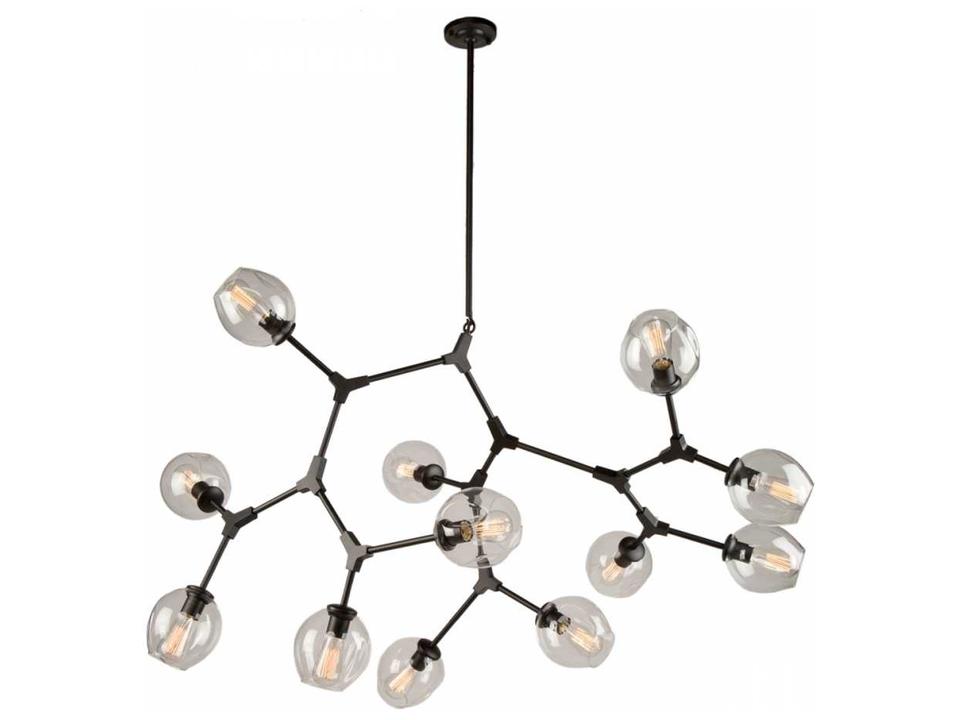
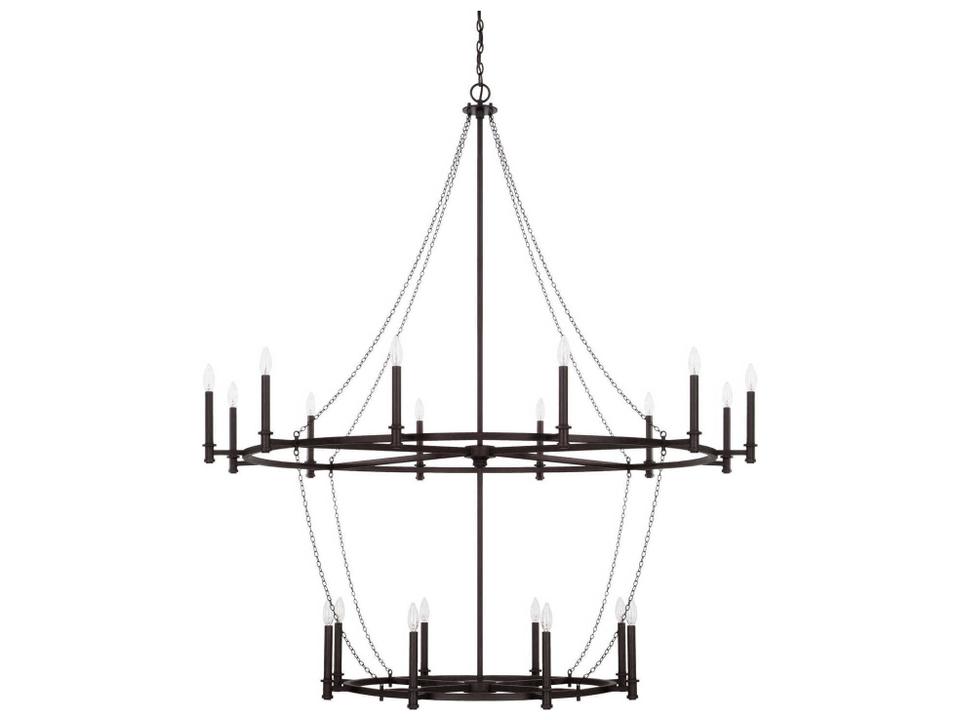
At this scale, silhouette matters as much as material. Cage and lantern chandeliers — open metalwork surrounding exposed bulbs — are the most recognizable industrial form. They work well centered over kitchen islands or in entryways where you want the geometry visible from every angle. Wagon wheel and ring chandeliers spread light horizontally, making them natural fits above long dining tables or in rectangular great rooms. Tiered and branching designs stack light sources vertically, a strong option for two-story foyers and stairwells.
Bulb count drives both the look and the function. A fixture with twelve or more sockets throws generous ambient light but also generates noticeable heat — keep that in mind for lower ceilings. Most of our industrial chandeliers accept dimmable LED bulbs, so you get the warm Edison-style glow without being locked into full brightness.
A large chandelier needs vertical room. In walkable areas, the bottom of the fixture should hang at least seven feet from the floor. Over a dining table, aim for 30 to 34 inches of clearance above the tabletop. In foyers with double-height ceilings, the fixture typically looks best positioned in the upper third of the vertical space — low enough to feel intentional, high enough to clear sightlines.
For diameter, a reliable starting point: add the room's length and width in feet, then convert that number to inches. A 14-by-16-foot room calls for roughly a 30-inch fixture. In industrial design, going slightly oversized is part of the aesthetic. Going too small is the more common — and more costly — mistake.
Open floor plans with especially long sightlines benefit from two matching chandeliers rather than one enormous piece. This distributes light more evenly and creates visual rhythm across the space.
Industrial chandeliers make bold statements. Give them room to breathe. Keep supplemental fixtures simple — recessed cans, understated wall sconces, or minimal track heads that provide fill light without competing. Browse our full chandelier collection if you need coordinating pieces for adjacent rooms.
Finish coordination doesn't require exact matching. A matte black chandelier sits comfortably alongside brass cabinet hardware or nickel pendants elsewhere, as long as one metal clearly dominates. Industrial interiors thrive on mixed metals — just anchor the room with a single primary finish.
These luxury fixtures suit a wide range of settings: loft kitchens with island seating, living rooms with vaulted ceilings, covered outdoor dining areas where damp-rated models are available, and commercial spaces like restaurants or retail showrooms. The industrial aesthetic reads simultaneously refined and unpretentious, which is why it holds broad appeal across both residential and hospitality design.