

Luxury Ceiling Lighting
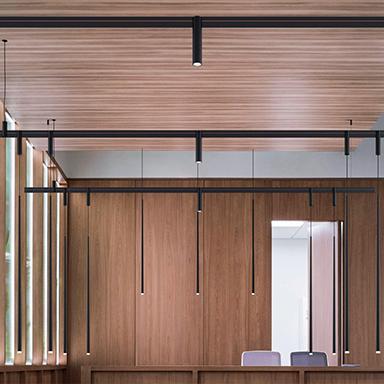

Materials and Finishes That Shape Ceiling Lighting
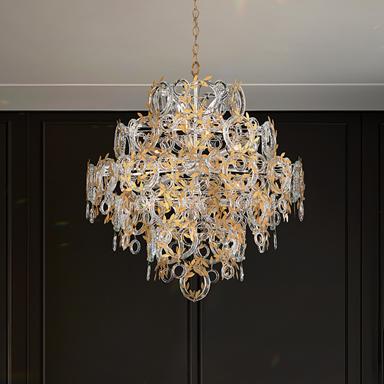
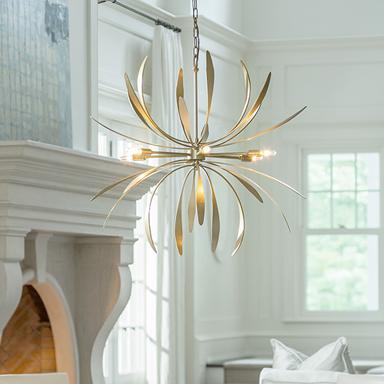
The finish on a ceiling fixture sets its visual tone before you even flip the switch. Brass and gold-leaf frames read warm, traditional, and slightly formal. Polished nickel, chrome, and matte black lean contemporary. Bronze and aged iron split the difference — they work well in transitional interiors that blend classic architecture with modern furniture. Then there's the shade material, which controls how light actually enters the room: clear glass throws sharper, directional light downward; frosted or opal glass diffuses it across a wider area; fabric drum shades create a soft ambient glow with minimal focused output.
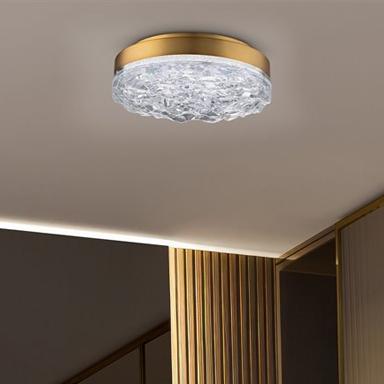
Your choice between these options shapes both the quality of light in a room and the fixture's decorative weight. A crystal-accented chandelier with exposed bulbs makes a statement. A simple flush mount with satin glass disappears into the ceiling and quietly does its job. Both are valid — it depends on what the room needs.
Fixture Types for Every Ceiling Height and Room
Flush mounts sit directly against the ceiling surface. They suit hallways, closets, bathrooms, and any space with ceilings under eight feet. Semi-flush mounts drop a few inches lower, adding visual presence while maintaining headroom clearance.
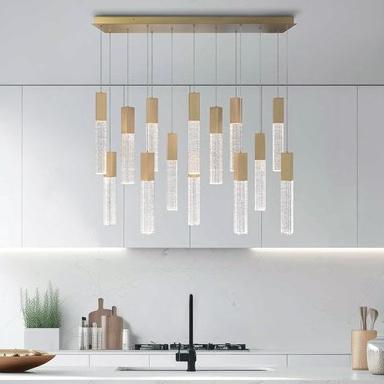
Pendants hang from a cord, chain, or rod and direct light to a defined area below. They're standard over kitchen islands, dining tables, and entryway consoles. Drop length matters — most pendants need at least 30 inches of clearance between the fixture's lowest point and the surface beneath it.
Chandeliers serve as a room's focal point. Crystal, wrought iron, and contemporary linear designs each set a distinctly different mood. A luxury chandelier suits dining rooms, foyers, and primary bedrooms with vaulted or standard-height ceilings where there's room to appreciate the fixture's scale.
Practical Buying Considerations
- Ceiling slope: Angled or vaulted ceilings require fixtures with adjustable canopies or sloped-ceiling adapters. Always check product specs before ordering.
- Dimmability: Not every fixture works with dimmer switches. LED-integrated models often need specific dimmer types — confirm compatibility to avoid flickering or buzzing.
- Location rating: Dry-rated fixtures suit interior rooms only. For bathrooms near showers or covered porches, look for damp-rated or wet-rated models.
- Bulb type: LED-integrated fixtures offer energy efficiency and long life. Standard-socket fixtures give you flexibility to swap color temperatures — 2700K for warm living spaces, 3500K–4000K for task-heavy kitchens.
- Scale: A useful rule — add the room's length and width in feet, then convert that number to inches. That's roughly the right fixture diameter. A 12×14-foot room calls for something around 26 inches wide.
Styling Your Luxury Ceiling Lighting
Layer your ceiling fixtures with table lamps, wall sconces, and recessed lighting for depth. A single overhead source creates flat, one-dimensional illumination. Two or three sources at different heights give a room warmth and visual dimension that one fixture can't deliver alone.
In open-concept spaces, use different ceiling fixture types to define zones — a chandelier over the dining area, recessed cans in the working kitchen, a statement pendant above a reading corner. Finish consistency ties it together: matching or complementary metal tones across fixtures keep the space cohesive without looking overly coordinated.
Our luxury ceiling lighting collection includes designs from distinguished brands in finishes ranging from hand-rubbed antique brass to brushed graphite. Whether you need a single flush mount for a powder room or a grand multi-tier chandelier for a two-story foyer, you'll find refined options scaled to your space.