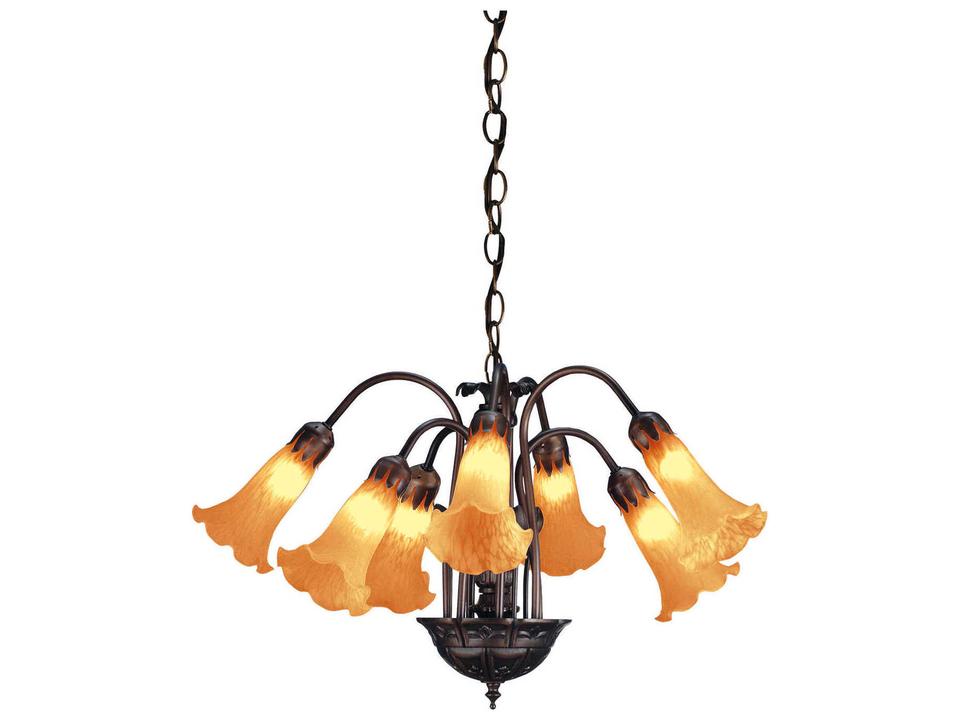
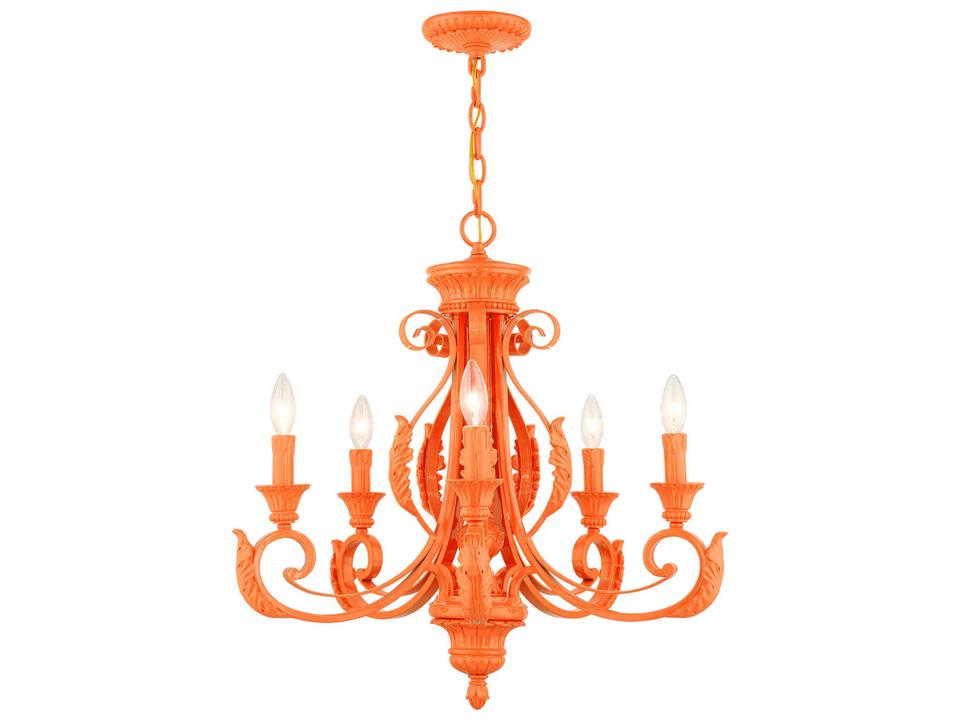
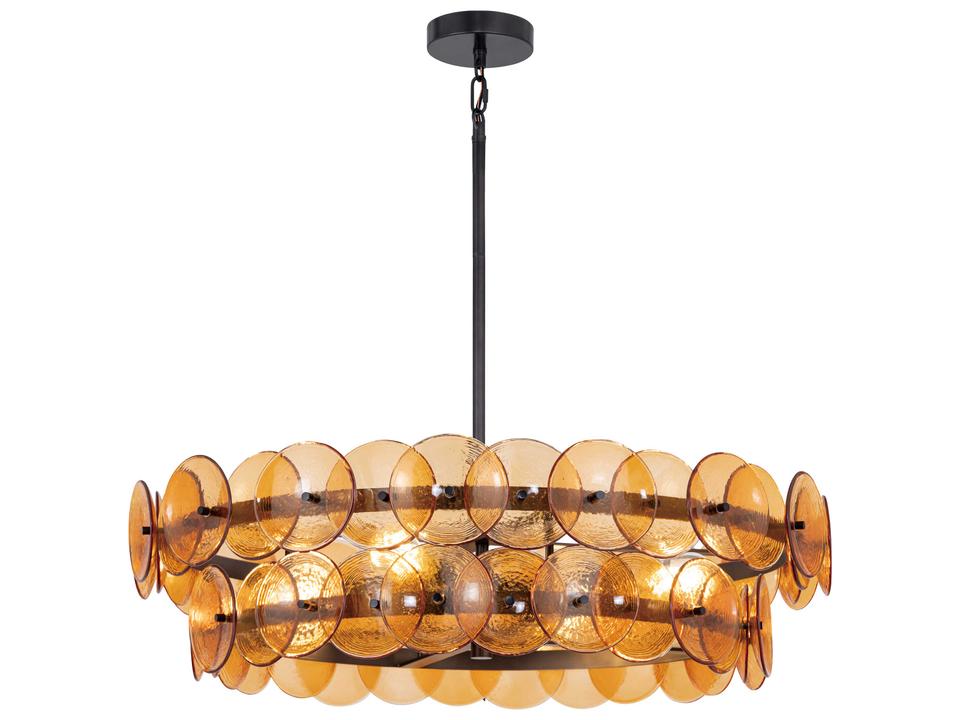
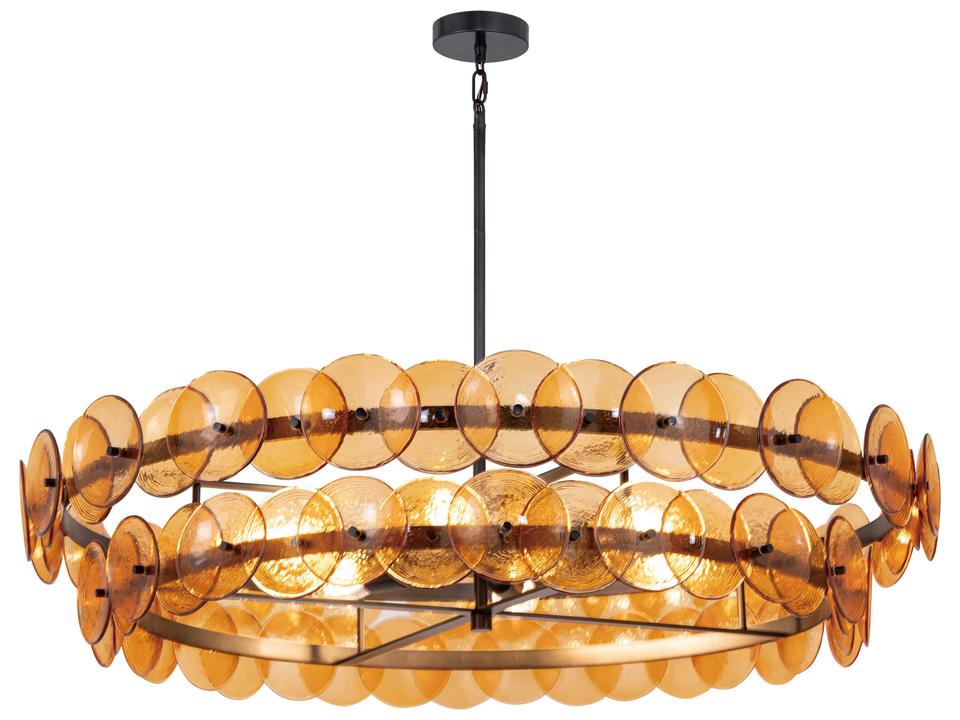
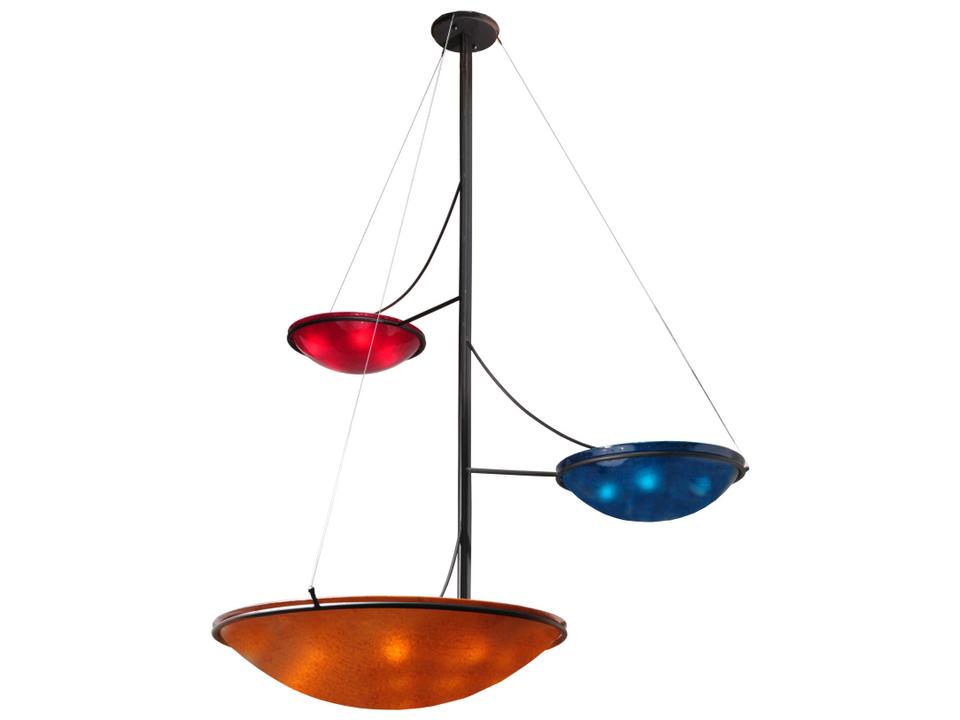
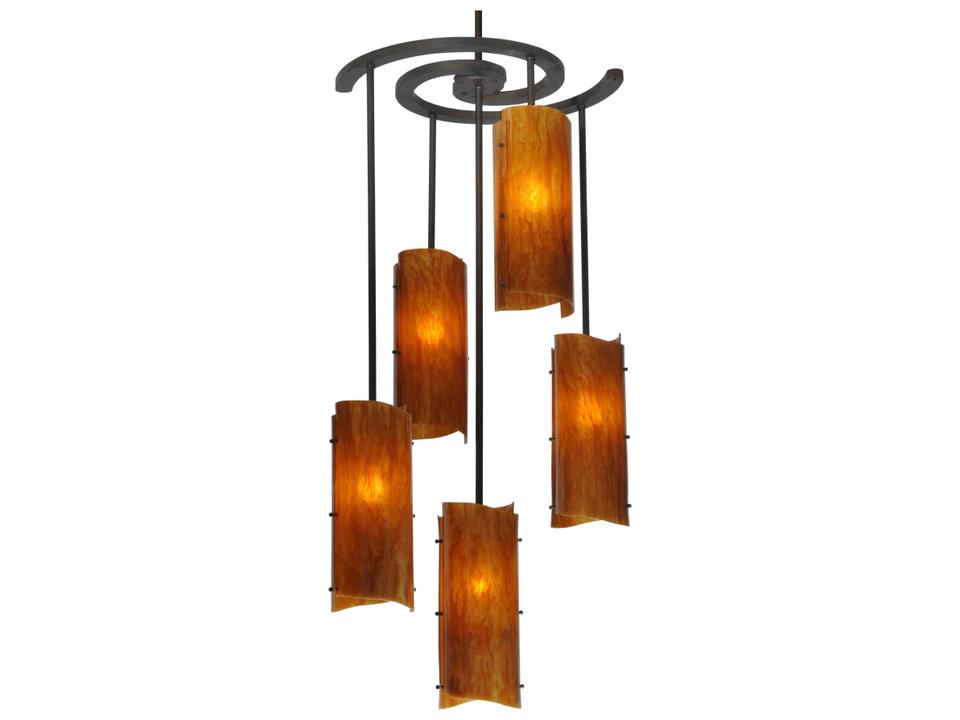
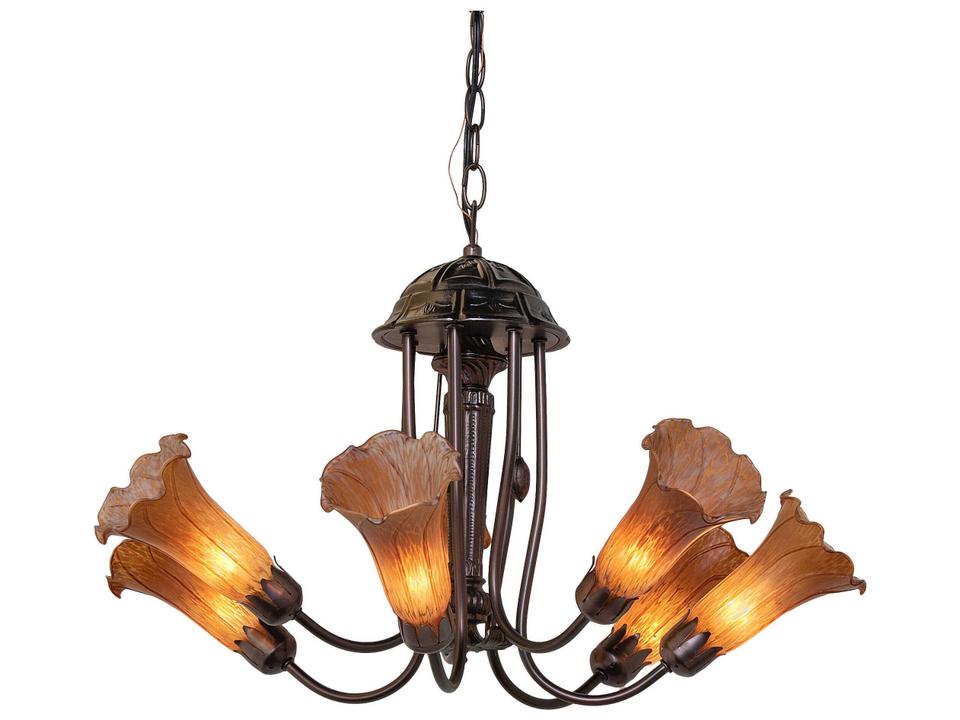
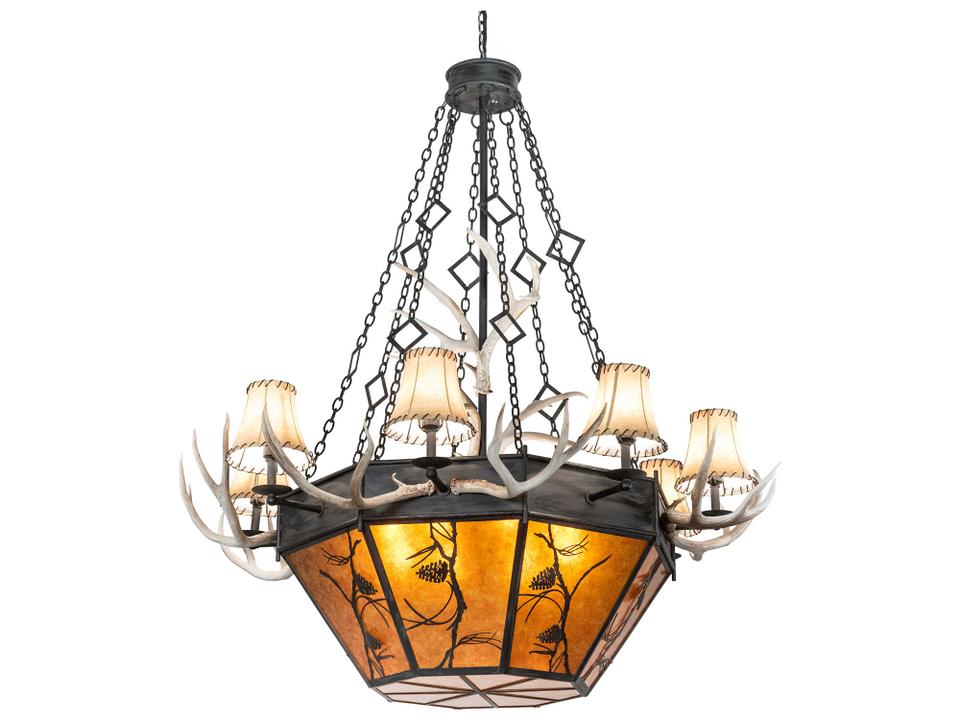
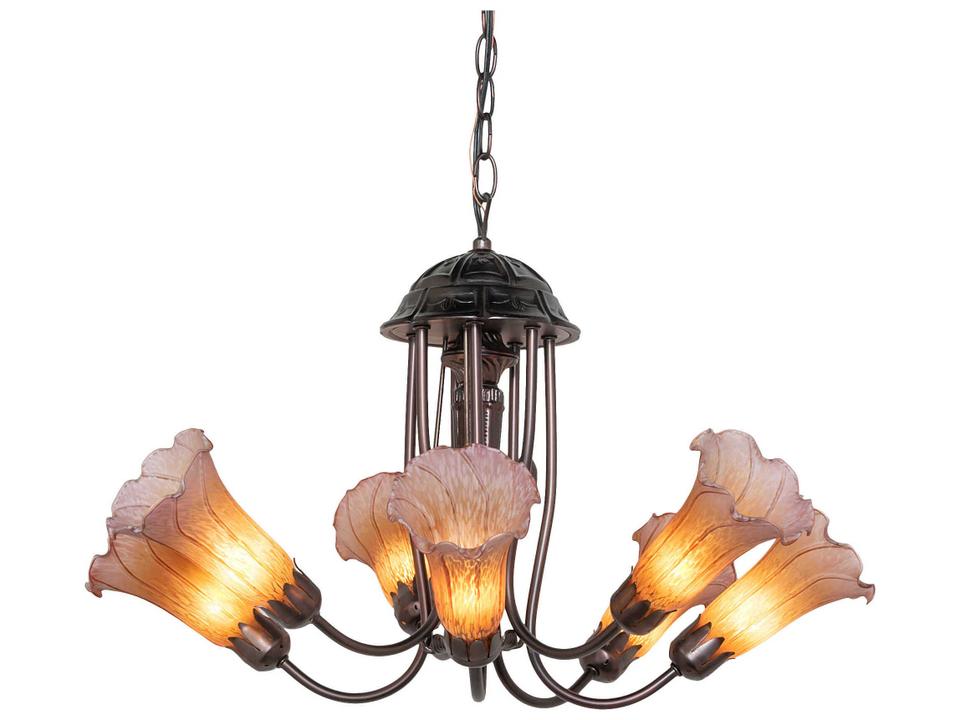
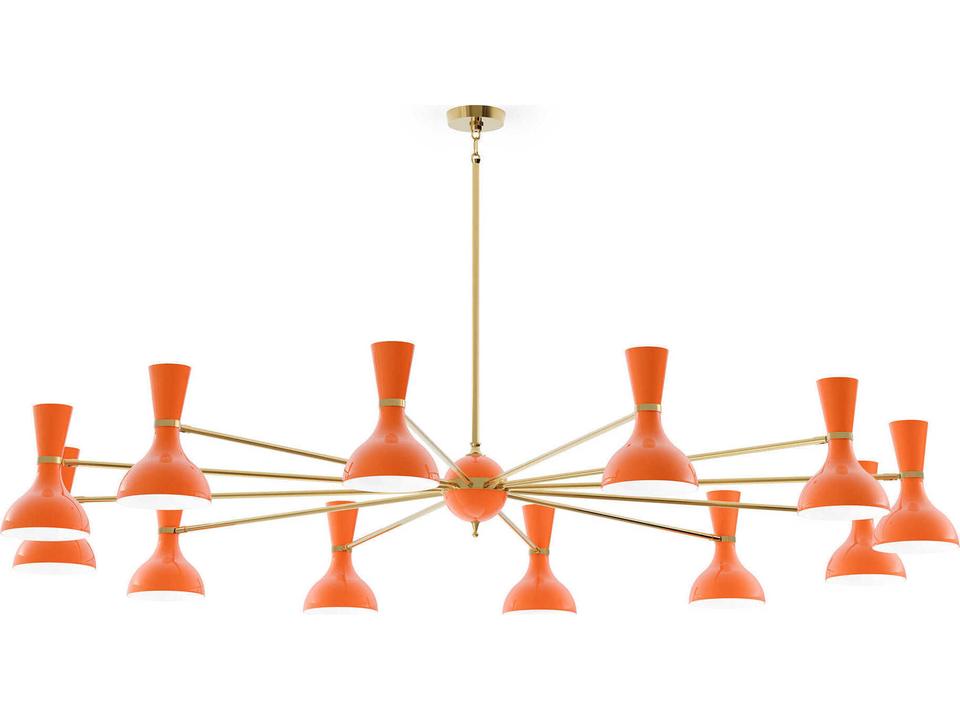
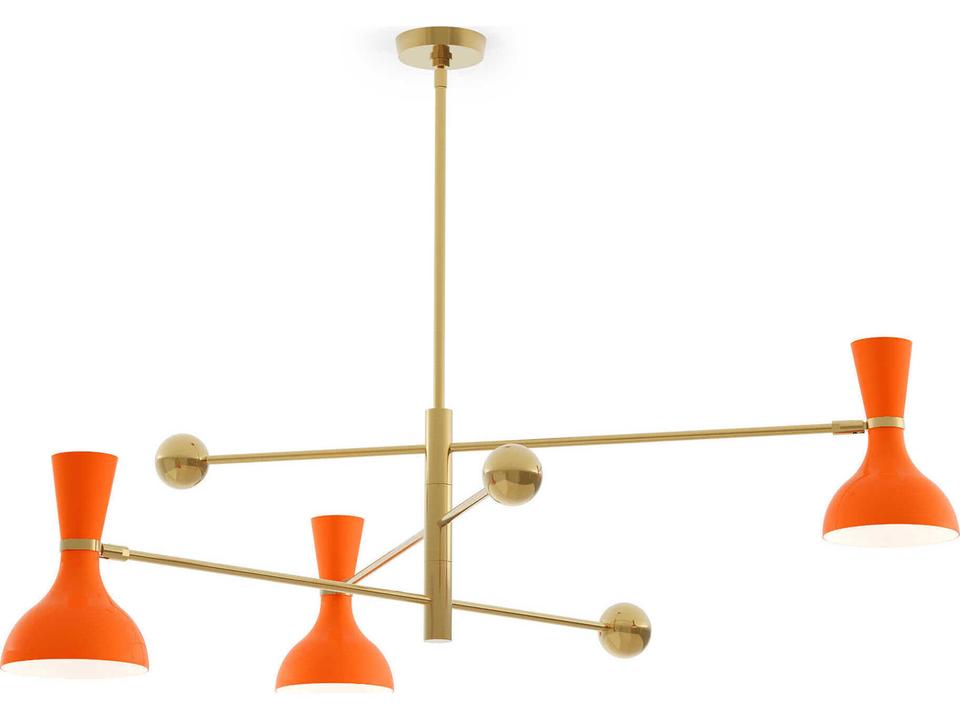
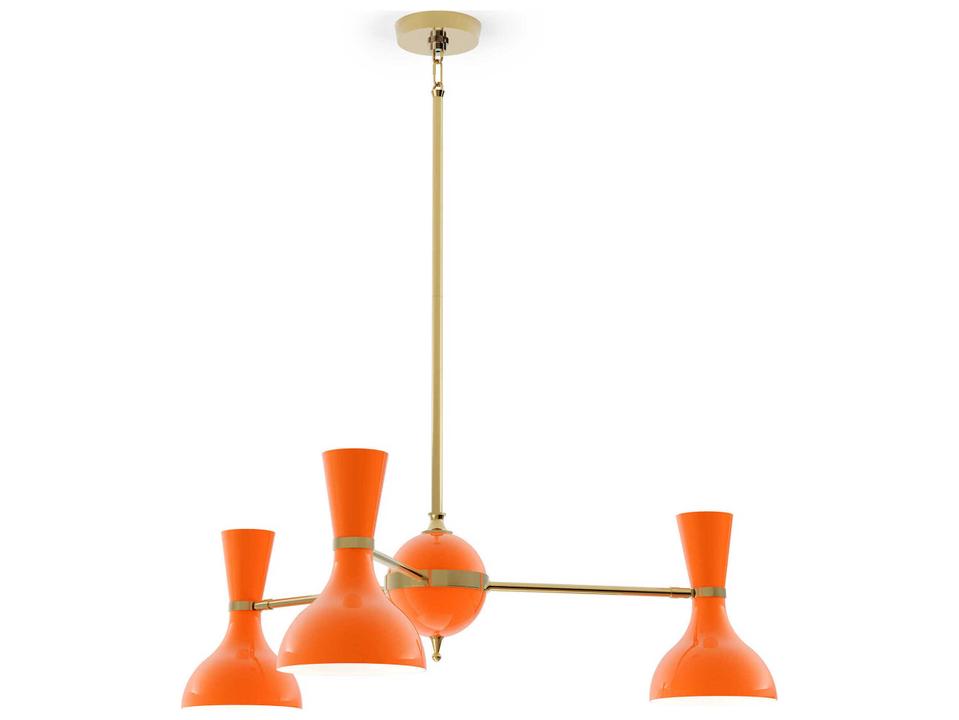
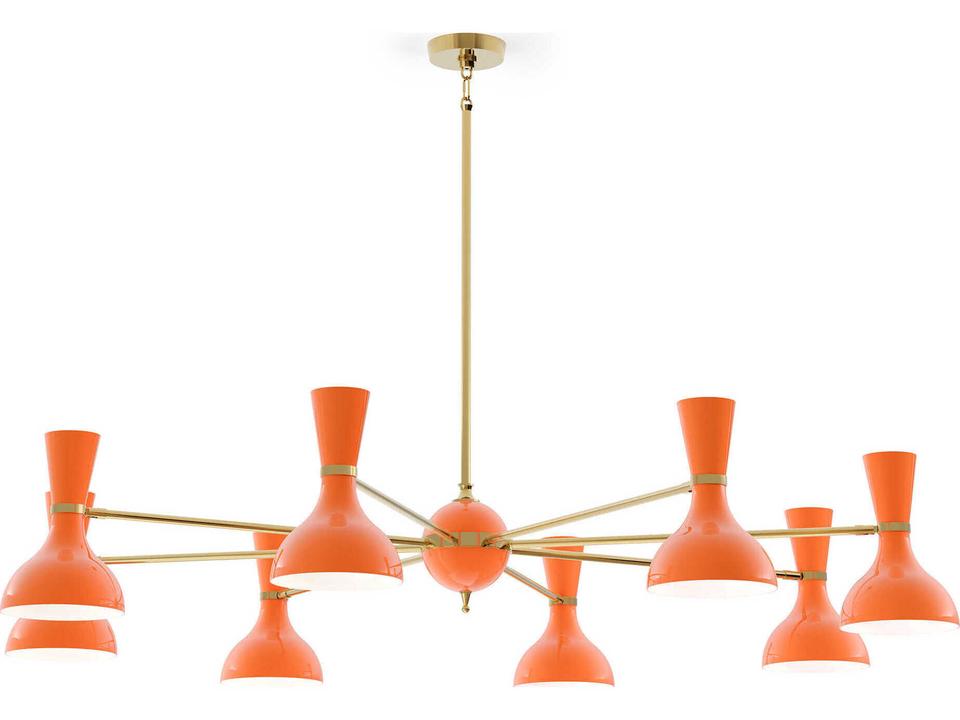
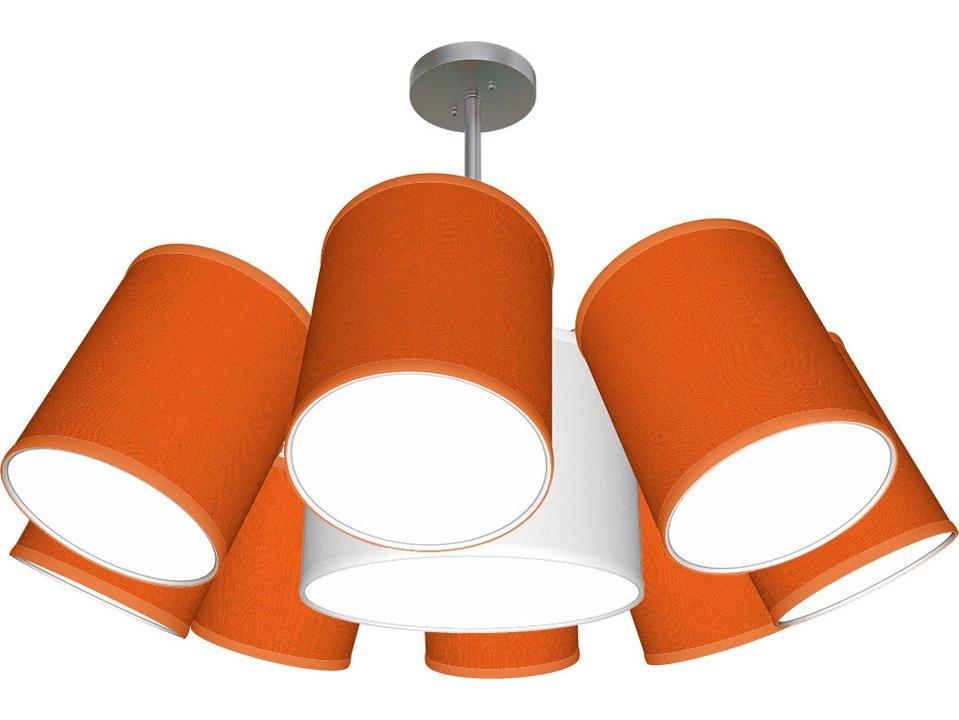
An orange chandelier throws warm, amber-tinged light that makes skin tones glow and wood grain come alive. It's not subtle — it's a deliberate choice that shifts the mood of a dining room, foyer, or living space toward something inviting and a little unexpected. The color can come from tinted glass, hand-blown Murano shades, colored crystal drops, or painted metal frameworks. Each source handles light differently, so the effect varies from a soft wash of warmth to bold saturated color. In a luxury home, that kind of deliberate color statement gives a fixture both function and focal-point presence.
The most common approach to achieving orange in a chandelier involves art glass — either mouth-blown shades in amber and tangerine tones or fused glass panels that diffuse light with depth and variation. Hand-blown glass introduces unique color patterns in each piece, so no two fixtures look identical.
Crystal chandeliers with orange or amber drops use faceted glass to scatter colored light across walls and ceilings. The effect is dramatic in darker rooms where reflections play off surrounding surfaces. Expect heavier weight and more involved installation with multi-tier crystal designs.
Metal and resin fixtures deliver orange through painted finishes or enameled metalwork. These tend toward a more contemporary or sculptural look — bold shapes in matte or satin orange that read as art objects even when unlit. Copper and burnished bronze frames can also read as warm orange under certain conditions.
Orange chandeliers work best in rooms where warmth sets the tone. A dining room benefits most — amber light flatters food and faces under evening light. Foyers gain real presence from a bold orange fixture, especially against neutral walls in cream, white, or charcoal.
For complementary pairings, consider:
Scale matters too. In rooms with standard 8-foot ceilings, keep the fixture diameter under 24 inches. Taller spaces — cathedral entries or two-story foyers — can handle larger multi-tier designs without overwhelming the room.
Consider what shade of orange you actually want. Soft amber differs dramatically from saturated burnt orange. Glass fixtures lean toward nuanced, shifting tones, while painted metalwork runs bolder and more consistent. If you prefer color that shifts with natural light throughout the day, blown glass offers more visual complexity than solid finishes.
Bulb compatibility deserves attention. Many art-glass chandeliers use candelabra-base bulbs — switching to warm LED at 2700K maintains intended color saturation without excessive heat. Confirm dimmer compatibility if possible; colored glass looks best when brightness adjusts for different times of day.
Our collection of luxury orange chandeliers includes hand-blown glass designs, crystal-accented fixtures, and contemporary sculptural pieces from distinguished manufacturers. Filter by size, style, or finish to find the right match for your room.