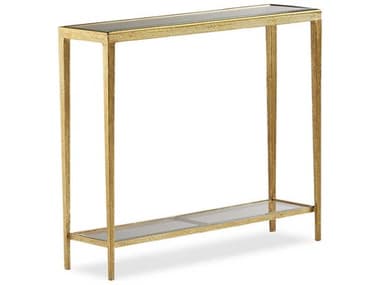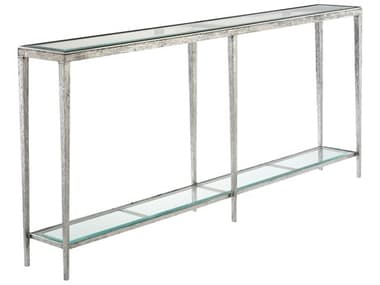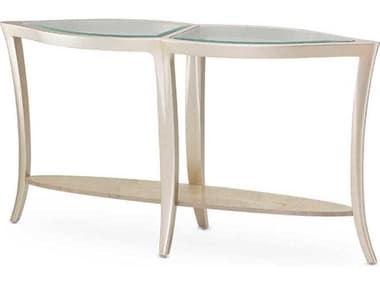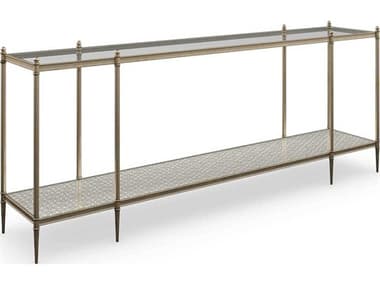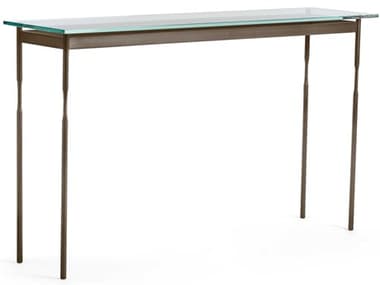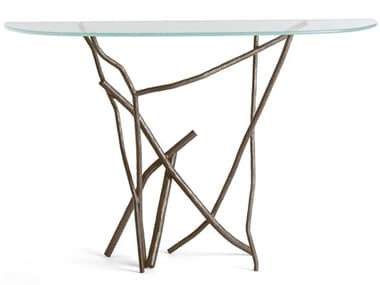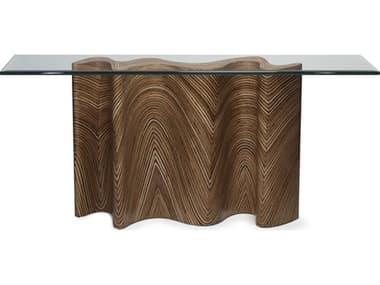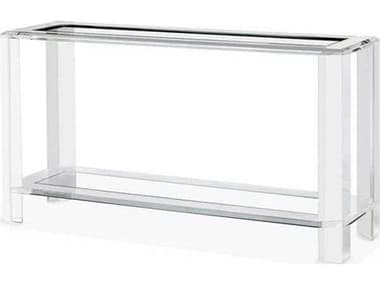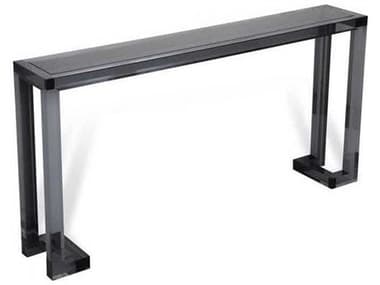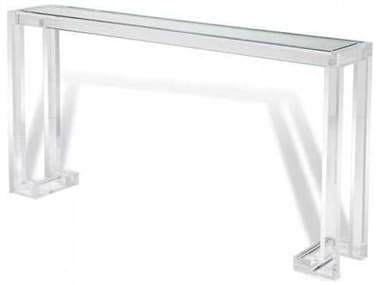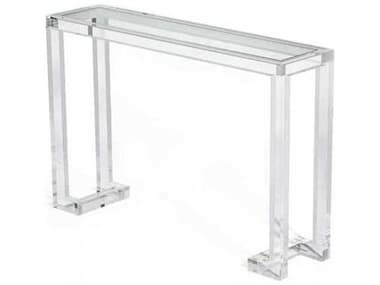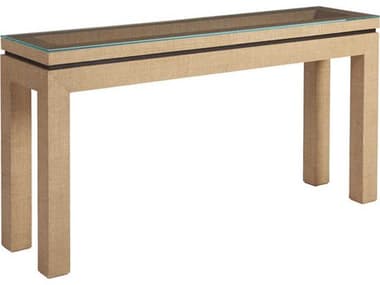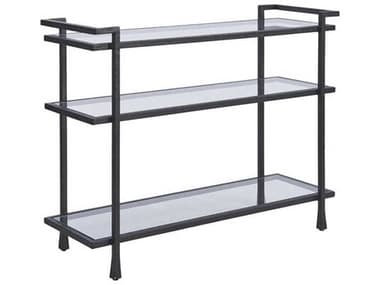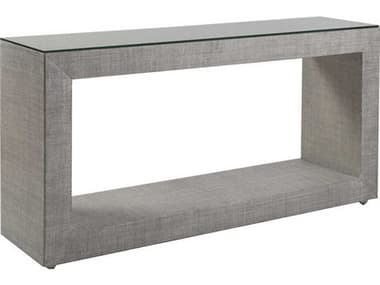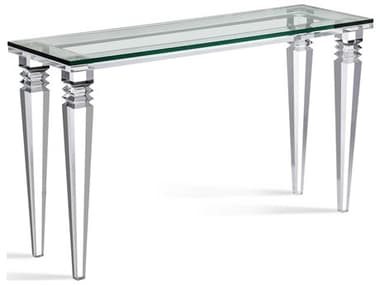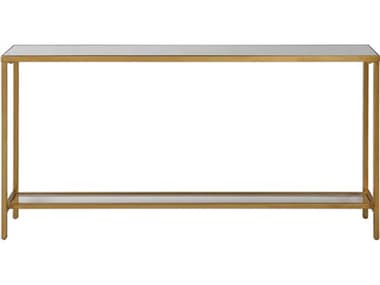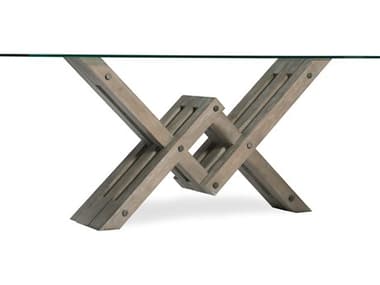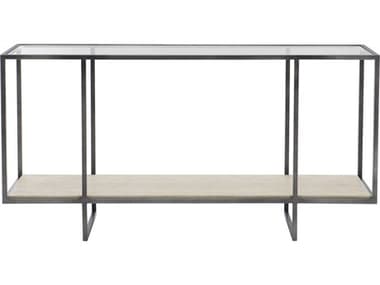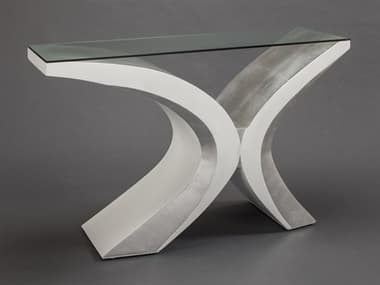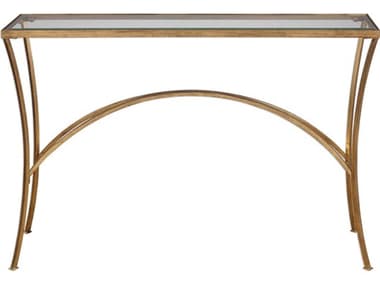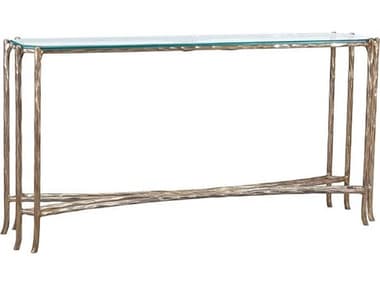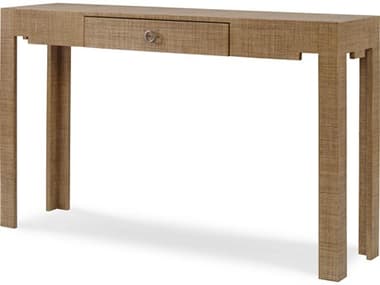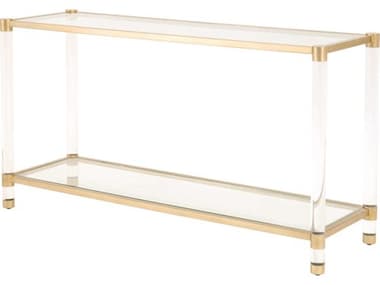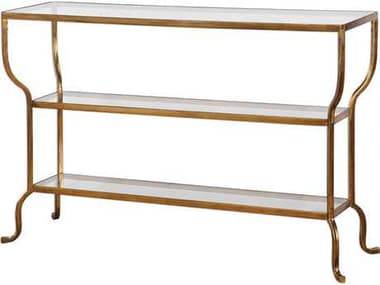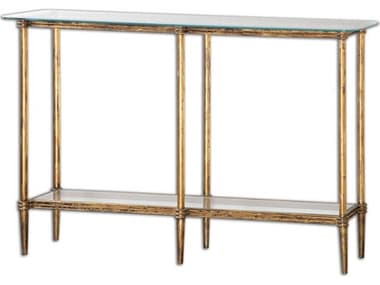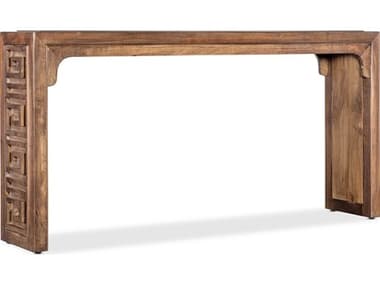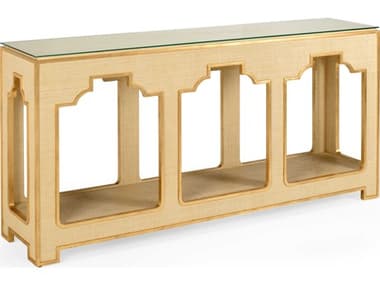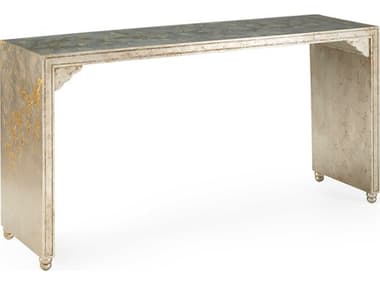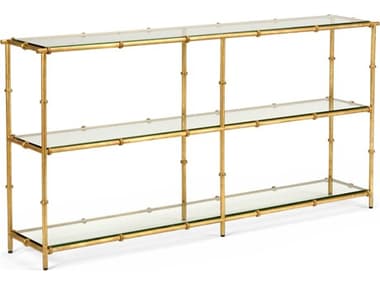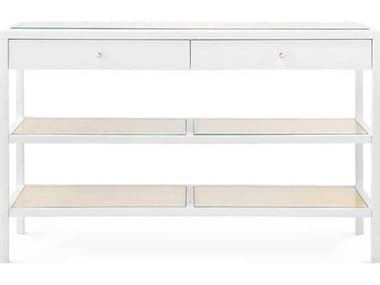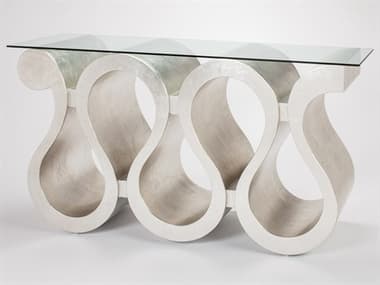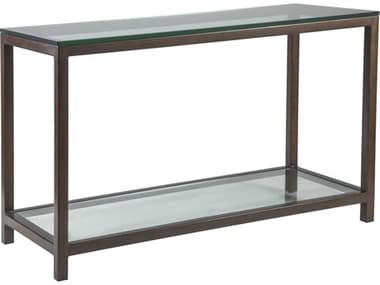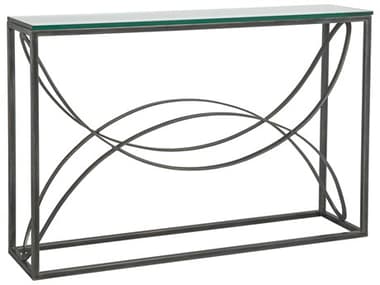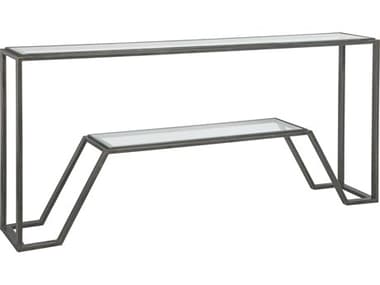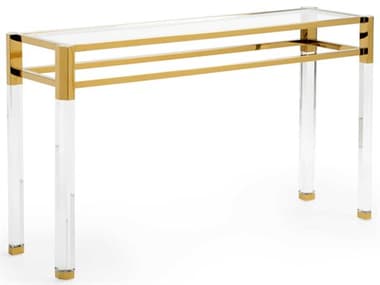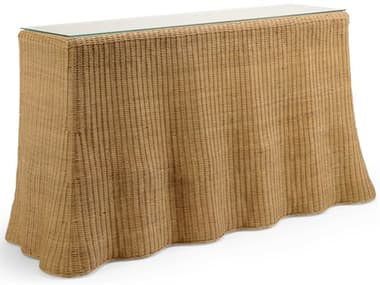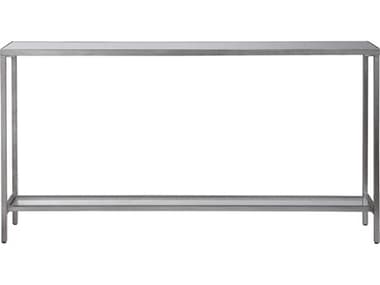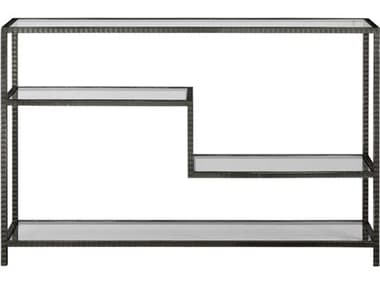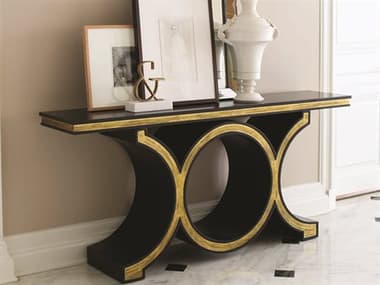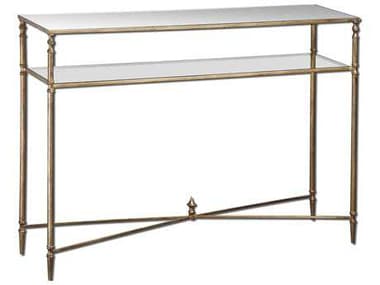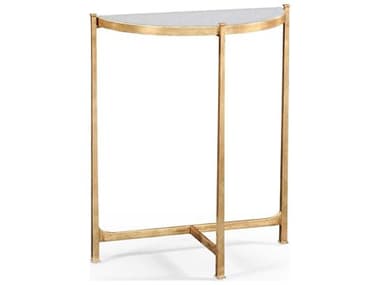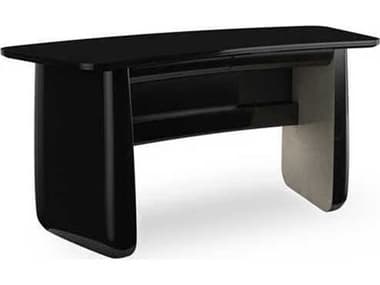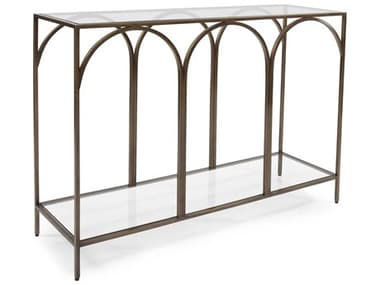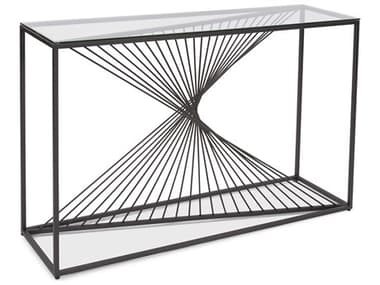
Console tables are one of those classics intended for more areas of your home than just the hall. They are also great as bedroom fixtures. In addition, you can place smaller decorative elements on them. They convey order and if medium-sized lamps are placed next to them, the sense of organization is accentuated. You will find a wide choice of available glass console tables below.
If you are looking for a certain shape when purchasing a glass console table, you have a wide range of choices. Choose from:
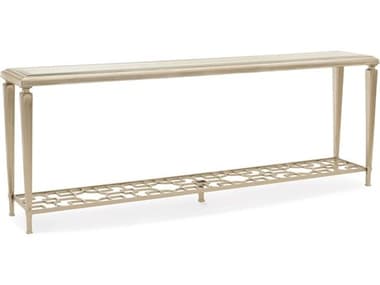
Prices start at $477, which is the Elk Lighting Glass Console Table. On the higher price range, consider the Caracole Classic Table, which is 68 inches in width and 16 inches deep with a price point of $4,870.
Some console designs specifically use glass and other materials. They are practical designs that can be used even as a small table. This detail makes them especially useful in small rooms where you can diversify their use. Brands include Artistica, Caracole, Driade, Fontana Arte, Global Views, Interlude Home, Noir Furniture, and Open Box.
Console glass tables serve different functions depending on the space. What sets glass consoles apart is that they fit with many decorating styles. Great results are even achieved in Scandinavian-style environments. If it is not entirely made of glass, you can choose a combination of materials. Aluminum, wood, or iron are the most popular. Glass also visually maintains the order of the space. These tables look great in narrow corridors, bathrooms or bedrooms. See our wide selection of glass console tables below.